
Hair loss affects thousands of men and women in Nepal and it has negative effects on self-esteem, confidence, and overall quality of life. Due to the rise in demand for long-term hair restoration, hair transplantation is among the most reliable and medically accepted treatments. However, prior to seeking the treatment, most patients would like to have an estimate of the hair transplant cost in Nepal and factors affecting overall pricing.
This article provides a comprehensive breakdown of cost ranges, graft requirements, recovery tips, and all important considerations for patients planning treatment in 2026. All information is written to support safe decision-making and encourage professional consultation.
Average Hair Transplant Cost in Nepal (2026)
In Nepal, the average cost of a hair transplant in 2026 typically ranges from:
NPR 40,000 to NPR 300,000+
This variation depends on multiple clinical factors, including the technique used, FUE or FUT, the total number of grafts, surgeon experience, and the level of hair loss in the patient. Pricing may vary between clinics, and only an assessment by a doctor can give the most accurate final quotation.
At Lucent Hair Clinic, hair transplant service pricing is transparent and based on detailed scalp evaluation, hair characteristics, and long-term restoration planning.
Understanding the Cost of FUE Hair Transplant in Nepal
FUE or Follicular Unit Extraction is the most widely preferred technique because it offers:
- No visible linear scarring
- Faster healing and minimal downtime
- Natural-looking, gradual results
- Highly precise extraction and implantation
FUE hair transplant cost in Nepal (2026): NPR 80,000 – NPR 300,000+
FUE is generally more expensive than FUT because it requires advanced technology, significant surgical expertise, and longer operational time.
Factors That Influence Hair Transplant Pricing
Every patient has a unique pattern of hair loss, and therefore the cost varies. The most significant factors include:
1. Total Number of Grafts Required
A hair transplant graft is a small tissue unit that contains 1–4 hair follicles. The more extensive the hair loss, the greater the number of grafts needed.
Approximate graft requirements in Nepal:
| Hair Loss Stage | Estimated Grafts |
| Small recession | 800–1500 grafts |
| Hairline correction | 1500–2500 grafts |
| Moderate baldness | 2500–3500 grafts |
| Large-area baldness | 3500–5000+ grafts |
Since most clinics charge based on graft quantity or package systems, graft count has the largest impact on cost.
2. Technique Used: FUE vs. FUT
Both techniques are effective but differ in procedure:
FUE (Follicular Unit Extraction)
- More advanced
- Minimal scarring
- Quicker healing
- Higher precision
- Higher cost
FUT (Follicular Unit Transplantation)
- More affordable
- Involves a strip method
- Leaves a linear scar
- Suitable for large graft requirements
Because FUE requires individual follicle extraction and advanced equipment, its cost is higher.
3. Surgeon Qualifications and Experience
Hair transplantation treatment is a surgical procedure that must be performed by trained medical professionals. Pricing increases when:
- The surgeon has advanced experience
- The clinic uses modern technology
- Safety protocols are strictly followed
This ensures graft survival, natural hairline design, and long-term results.
4. Donor Hair Quality and Density
The density and strength of the donor area (usually the back of the scalp) influence:
- Number of extractable grafts
- Technique selection
- Total surgery duration
Patients with weaker donor areas may require multiple sessions or additional techniques, affecting the overall cost.
5. Additional Medical Care and Follow-Up
Some clinics include:
- Pre-procedure tests
- PRP therapy
- Post-care medications
- Follow-up checkups
These can influence the final cost depending on the treatment plan.
Hair Transplant Before and After: What Patients Can Expect
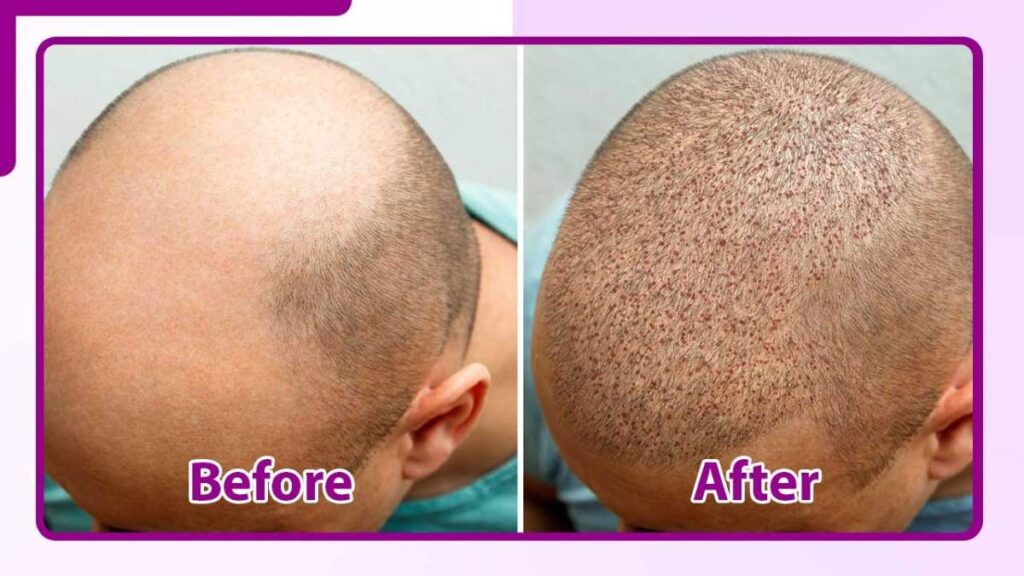
A hair transplant offers gradual but permanent improvement. Expected timeline:
After 1–2 Weeks
Initial healing and reduction of redness or scabbing.
After 2–3 Months
Shedding phase ends, and early thin hair begins to appear.
After 4–6 Months
Visible growth, increased density, and natural patterns forming.
After 9–12 Months
Full results with natural volume and mature hairline.
Expert surgeons provide personalized before-and-after guidance, ensuring realistic expectations and patient safety.
Is a Hair Transplant Worth It?
For eligible patients, a hair transplant service is considered a medically supported, long-term solution. It is often worth it for several reasons:
- Permanent results (donor hair is DHT-resistant)
- Natural hairline restoration
- Improved appearance and confidence
- Minimal maintenance after full growth
- No reliance on temporary solutions like fibers or medications
However, a consultation for hair transplant is necessary to confirm whether your donor area and scalp condition make you a suitable candidate.
How Long Does a Hair Transplant Last?
A successfully performed hair transplant can last a lifetime. This is because transplanted hair follicles are taken from areas genetically resistant to baldness.
Results remain permanent as long as patients follow:
- Proper aftercare
- Healthy scalp maintenance
- Routine checkups when advised
Other non-transplanted areas of the scalp may continue to thin with age, which is normal.
FAQs
1. How much does a hair transplant cost in Nepal?
In 2026, costs range from NPR 40,000 to NPR 300,000+, depending on technique, grafts, and clinical expertise. A medical assessment is required to determine exact pricing.
2. What factors affect hair transplant pricing?
Key factors include the number of grafts, procedure type (FUE or FUT), surgeon experience, donor hair quality, and additional medical care.
3. Is FUE more expensive than FUT?
Yes. FUE hair transplant cost is typically higher because it involves detailed follicle-by-follicle extraction, advanced equipment, and higher surgical precision.
4. How many grafts will I need and how does it affect cost?
Your graft requirement depends on your stage of hair loss. More grafts mean higher procedure time and increased cost. Only a clinical evaluation can determine the exact number.
Popular Posts


Recent Posts
-

PRP Hair Treatment in Nepal: Cost, Process, and Results (2026 Guide)
Jul 03, 2026 | Lucent
-

Is Laser Hair Removal Safe? Risks, Side Effects & Safety Guide
Jun 11, 2026 | Lucent
-

Wrinkles on Face: Causes, Types, Prevention and Treatment Guide
Jun 11, 2026 | Lucent
-

Best Laser Hair Removal in Kathmandu – Safe & Long-Lasting Hair Reduction
Jun 11, 2026 | Lucent
-

Best Face Yoga Exercises for a Lifted, Toned & Youthful Face
May 18, 2026 | Lucent
-

How to Identify the Best Skin Clinic in Kathmandu for Safe Treatments?
May 18, 2026 | Lucent
-

Hydrafacial Benefits for Glowing and Healthy Skin
May 18, 2026 | Lucent
-

Laser Hair Removal Price in Nepal: What You Should Expect
May 03, 2026 | Lucent