Published: June 2026
Last medically reviewed: May 2026
Reviewed by: Dr. Abhishek Bilas Pant, Dermatologist, Lucent Skin & Hair Clinic
Next review due: June 2027
Sources: American Academy of Dermatology, FDA, Mayo Clinic
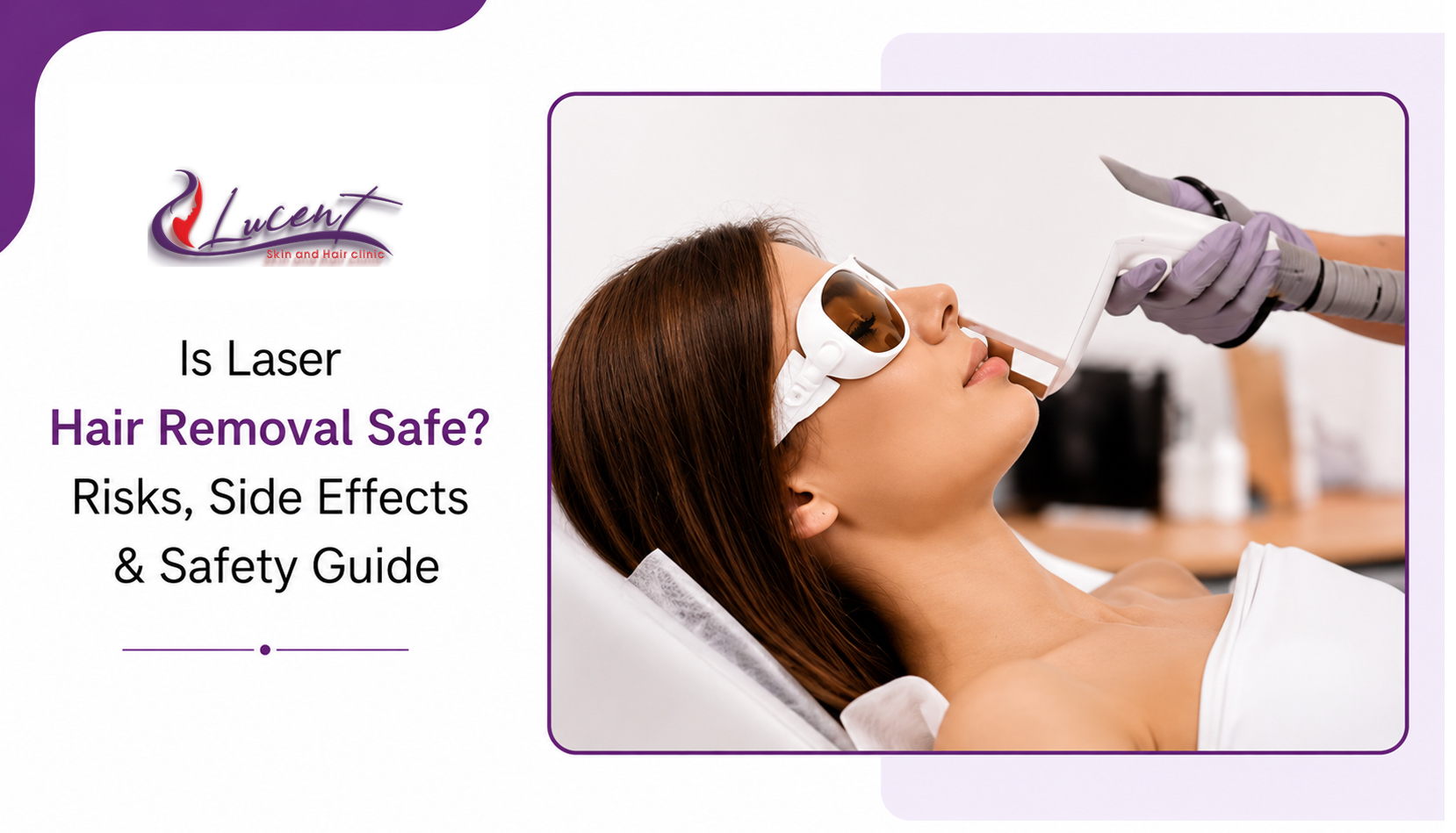
Laser hair removal is generally safe when performed by a qualified dermatologist or trained laser specialist using settings matched to your skin type, hair colour, and treatment area.
The most common side effects are temporary redness, swelling, itching, and mild irritation. Rare risks include burns, blisters, pigmentation changes, scarring, and eye injury, usually linked to incorrect settings, poor aftercare, or unqualified providers.
In general, laser hair removal safety for skin relies on several factors, such as choosing a proper clinic, appropriate laser settings, and proper care afterwards, and all of the above are the answer to questions such as is laser hair removal safe?
Is Laser Hair Removal Safe?
According to the American Academy of Dermatology (AAD), Laser hair removal is safe when skin type, hair colour, laser type, and provider experience are properly considered. In certified clinics using medical-grade lasers, risks are low, and safety is high.
At Lucent Skin and Hair Clinic, each patient is assessed using Fitzpatrick skin typing to select the most suitable and safe laser settings.
Several factors influence how safe and effective the treatment will be:
- Skin type (Fitzpatrick classification)
- Hair colour and thickness
- Type of laser technology
- Experience of the dermatologist or technician
- Good after-care and sun protection
People often wonder how safe laser hair removal is. Usually, you are able to perform the treatment safely because it can be customised depending on your specific skin color and hair. A professional clinic will significantly reduce the risk of irritation or burns.
How Laser Hair Removal Works?
Laser hair removal works by targeting the pigment (melanin) in hair. The laser converts light into heat, which damages the hair follicle and reduces future growth.
It’s a simple step-by-step process:
- The laser emits focused light energy.
- This light is absorbed by the pigment (melanin) in the hair.
- The absorbed energy is transformed into heat
- This heat kills the hair follicle and decreases future hair growth.
Key point: The laser beam only targets the hair follicles and does not affect other parts of the skin. For this reason, laser hair removal is considered relatively safe as long as the settings are set correctly according to skin type and hair color.
There are cycles in the growth pattern of hair; therefore, several sessions would be required for optimum effects.
Common Side Effects of Laser Hair Removal
Most side effects of laser hair removal are mild and temporary. The common reactions include redness, slight swelling, itching, and skin sensitivity in the treated area. These usually appear immediately after treatment and resolve within a few hours to 2–3 days with proper aftercare such as cooling, moisturising, and sun protection.
1. Redness and swelling
- Most common side effect.
- Skin may look like a mild sunburn
- Usually takes a few hours to 24-48 hours
2. Itching or tenderness
- temporary skin sensitivity post treatment
- The area might feel mildly warm or irritated
- Usually resolves in 1-2 days
3. Temporary pigment changes
- You might see light or dark patches on the treated skin
- More often seen in darker skin tones or recently tanned skin
- Tends to fade out gradually with proper care
The above laser hair removal side effects are generally harmless in most instances and occur due to the skin’s reaction to lasers. FDA-approved laser devices are commonly used in clinical settings to reduce risk of burns and complications.
Side Effects Summary Table
Here is a quick summary of the common and rare laser hair removal side effects or laser hair removal risks, how often they occur, how long they last, and how to prevent them:
| Side Effect | How Common | Duration | Prevention |
| Redness & swelling | Common | Hours–2 days | Cooling, gentle skincare |
| Itching | Common | 1–2 days | Moisturizer, avoid scratching |
| Pigment changes | Less common | Weeks–months | Avoid sun exposure |
| Burns | Rare | Temporary | Correct settings |
| Blisters | Rare | Few days | Skilled technician |
| Scarring | Very rare | Long-term | Proper aftercare |
| Eye injury | Preventable | Serious | Protective eyewear |
The table helps you appreciate some of the laser hair removal side effects associated with laser hair removal. In case of proper treatment, the majority of the side effects (if they occur at all) tend to be minimal and only temporary.
Rare Risks and Complications
Rare risks of laser hair removal are uncommon but can happen if done incorrectly. They may include burns, blisters, pigmentation changes, and, very rarely, scarring or eye injury. Most of these risks can be avoided with proper settings, trained professionals, and good aftercare
Burns or blisters
There might be cases of the occurrence of burns and blisters, and these are usually due to:
- Improper laser settings
- Inexperienced operators
- Recently tanned or sunburned skin
Scarring
Scarring is extremely uncommon, but could be seen under certain circumstances, such as:
- Picking or scratching of the treated skin after the procedure
- Non-healing or ignoring of aftercare
Skin texture changes
Individuals could have temporary alterations like:
- Slight roughness of the skin
- Sensitive skin
Most times, such alterations will heal with skin care alone.
Eye injury risk
Laser treatments close to the face need strict safety precautions.
- Eye protection should be used throughout the procedure.
- Not using sufficient protection may cause damage to the eyes.
In general, these laser hair removal risks associated with this treatment are uncommon and are very likely to be avoided if a good clinic is chosen.
Is Laser Hair Removal Safe for Darker Skin Tones?
Laser hair removal is safe for darker skin tones when the correct laser type, such as Nd:YAG, is used and settings are adjusted properly. Dermatology research and clinical guidelines support the use of Nd: YAG lasers for safer treatment of darker skin types.
Proper evaluation using the Fitzpatrick skin scale helps reduce risks like burns or pigmentation changes.
Best technology for darker skin:
- Nd: YAG laser (high wavelength)
- Lower risk of damaging the skin and developing pigmentation
- Optimal solution for deep melanin skins
Important safety considerations:
- Conduct patch tests before proceeding with the full procedure
- An accurate Fitzpatrick skin type evaluation is mandatory
- Do not go to clinics that follow a one-size-fits-all technique
Main point: Dark skin should be treated by specialists who are well-versed to avoid complications like hyperpigmentation, burns, and uneven skin tone. Such a clinic is an assurance of safety and effectiveness.
Who should avoid Laser Hair Removal?
Laser hair removal is not suitable for everyone. People with active skin infections, open wounds, sunburn, severe skin conditions, or a tendency for keloid scars should avoid or delay treatment. It is also not recommended during pregnancy or when using photosensitising medications unless advised by a doctor.
Laser hair removal should not be done if you have:
- Open wounds or existing infection in the skin of the region being treated
- Presence of eczema or psoriasis flare-up
- Recently tanned skin or sunburn
- Tendency to develop keloids
- Use of photosensitising medication
- Lesions that have suspicious characteristics or previous skin cancers
- Pregnancy (generally postponed due to limited knowledge about its safety during pregnancy)
Key points: The use of laser hair removal treatment is not always entirely prohibited; it needs careful medical examination and individual assessment.
How to prepare before laser hair removal?
Before laser hair removal, patients should avoid sun exposure, stop waxing or plucking, shave the area 24 hours before treatment, and inform the provider about medications or skin conditions. Proper preparation lowers the risk of burns, irritation, and pigmentation changes.”
Before treatment:
- Stay away from the sun at least two weeks before your treatment
- Do not use wax, thread, or pluck hair (you can shave your hair)
- Have the treatment area shaved 24 hours before your treatment
- Use skin care products as recommended by your dermatologist
- Let your physician know about all medications and skin conditions
- In case of sensitive skin, schedule a patch test first
Laser hair removal tips on preparation will allow you to reduce the risk of burns, irritation, or hyperpigmentation of the skin.
Laser Hair Removal AfterCare
Laser hair removal aftercare is essential for safe healing and best results. Proper care helps reduce side effects like redness, irritation, and pigmentation changes. Most symptoms are mild and improve within a few days when the skin is protected and soothed correctly.
After treatment:
- Avoid sun exposure for a few days
- Use SPF 30+ sunscreen daily
- Avoid hot showers for 48 hours
- Do not scratch or rub the area
- Use soothing, fragrance-free creams
- Avoid the gym for the first two days
Contact your clinic if:
- You experience severe pain.
- There can be burns or blisters on your skin.
- There is unusual and prolonged skin discoloration.
Proper laser hair removal aftercare improves the effectiveness and safety of your procedure. It helps your skin heal properly.
Are At-Home Laser/IPL Devices Safe?
At-home laser and IPL devices are generally safe if used correctly, but they are less powerful than clinic treatments and can cause irritation or burns if misused. They work best for maintenance and require careful use based on skin type.
Pros of at-home laser/IPL devices:
- Easy and can be used at home
- Cheaper than laser treatment at clinics
- Promote a gradual reduction in the thickness of hair
Cons and safety concerns:
- Less effective compared to professional laser treatment
- Greater chance of misuse (incorrect setting/overuse)
- Not for use on all types of skin and hair
- No professional supervision and safety supervision
The devices are useful for maintenance purposes or for minimal hair removal, but the procedure performed in the clinic using lasers is considered to be the safest option available.
How to choose a Safe Laser Hair Removal Clinic?
Choosing a safe laser hair removal clinic is important for reducing risks and ensuring effective results. A good clinic uses trained professionals, medically approved laser devices, proper skin assessment, and strict hygiene standards.
What to look for in a safe clinic:
- Qualified dermatologist or laser technician
- A laser device that is FDA-approved or medically approved
- Right skin type (Fitzpatrick scale)
- Safety test patch lab
- Clean and hygienic setting
- Information about risks, effects, and post-procedure care
Warning signs to avoid:
- Clinics that do not conduct skin testing
- “A one-size-fits-all” service, or a quick procedure
- Procedures performed by personnel who are not properly trained or certified
- Not receiving any skin test or consultation before the procedure
Lucent Skin and Hair Clinic is the clinic where you can get safe and effective results with the proper testing of your skin.
Why Choose Lucent Skin and Hair Clinic?
Choosing an appropriate clinic is essential when it comes to getting quality and medically safe results from laser hair removal safety procedures and ensuring is laser hair removal safe for skin concerns are properly addressed. At Lucent Skin & Hair Clinic, we provide all our treatments while considering medical safety and precision as well as taking care of patients’ skin.
- Skin type analysis before treatment
Your skin will be examined and categorised on the Fitzpatrick scale to determine the appropriate laser setting.
- Medical-grade laser technology
We use state-of-the-art laser systems, which have been clinically studied to achieve safe and reproducible results with few side effects.
- Experienced laser specialists
Our professionals are trained on different skin tones and hair types and are sure to provide an accurate and safe treatment.
- Safe, hygiene-focused procedures
We provide a safe clinical environment for all patients and follow strict sterilization and hygiene protocols.
- Personalized treatment plans
We develop a personalized treatment plan for each client based on their skin condition, hair growth pattern, and desired results.
Final Thoughts
Laser hair removal is a safe and effective method of long-term hair reduction when performed by trained professionals using proper technology. It provides long-lasting results compared to traditional methods like shaving or waxing and is a widely used treatment modality in dermatology and cosmetic clinics.
However, safety is dependent on multiple factors such as adequate skin evaluation, appropriate laser settings, and practitioner experience. If you take these steps, most laser hair removal side effects are mild and temporary. Serious complications are still rare.
The key to the best results is to know the procedure, follow the right preparation guidelines, and choose a reputable clinic that abides by medical safety standards.
When performed by trained professionals and with proper aftercare, laser hair removal can provide smooth, long-lasting results with little risk and high patient satisfaction.
Medical Disclaimer:
This article is for informational and educational purposes only and is not intended as a substitute for medical advice, diagnosis, or treatment. Always consult a qualified dermatologist or licensed laser specialist before any cosmetic treatment.
FAQs About Laser Hair Removal Safety
Is laser hair removal safe?
Yes, laser hair removal is generally safe when performed by a licensed and trained professional using the proper laser settings for your skin type.
What are the most common side effects of laser hair removal?
Most common side effects include:
- Redness
- Slight swelling.
- Itchy skin or skin irritation
They are transient, typically lasting 24 to 48 hours.
Can laser hair removal cause burns?
Yes, but burns are rare and generally only occur if the procedure is done incorrectly or with the wrong settings or on freshly tanned skin.
Can laser hair removal cause scarring?
Scarring is very rare and is generally only seen if burns are not well-treated or if aftercare instructions are not followed.
Is laser hair removal safe for dark skin?
Yes, it is safe for darker skin tones provided the right type of laser is used (such as Nd: YAG), and it is performed by an experienced practitioner.
Is laser hair removal safe during pregnancy?
It should be avoided because there are not many studies on its safety in pregnant women; however, no side effects have been found from it.
Is at-home laser hair removal safe?
Home devices are safe if used appropriately; however, they are:
- Less intense compared to the lasers used in clinics
- More prone to human error
- Suited only for certain skin types
The professional procedure is considered to be safer and more effective.
How do I choose a safe laser hair removal clinic?
Choose a clinic that has:
- Technicians trained by or qualified dermatologists
- Lasers machines (clinically tested and FDA approved)
- Type of skin assessment
- Clear advice and guidance on aftercare
Can laser hair removal cause cancer?
According to FDA and Mayo Clinic guidance, laser hair removal uses non-ionizing light and does not damage DNA.
Is laser hair removal permanent?
Laser Hair Removal is a long-term hair reduction treatment, not permanent hair removal. Most people need maintenance sessions to keep the results.
Book a Laser Hair Removal Safety Consultation
Get a professional skin and hair assessment with Lucent Skin and Hair Clinic to understand if laser hair removal is safe and suitable for you.
Popular Posts


Recent Posts
-

Tired of Searching “Dermatologist Near Me”? Discover Lucent Skin and Hair Clinic in Bhaktapur, Nepal!
Jul 24, 2026 | Lucent
-

Which Skin Whitening Treatment Is Right for You? A Complete Comparison Guide
Jul 24, 2026 | Lucent
-

Hair Treatment in Nepal: Types, Costs & Which Treatment Is Best?
Jul 12, 2026 | Lucent
-

How to Choose the Best Dermatologist in Nepal?
Jul 08, 2026 | Lucent
-

Best Skin Care Products in Nepal (2026): A Dermatologist’s Buying Guide
Jul 06, 2026 | Lucent
-

PRP Hair Treatment in Nepal: Cost, Process, and Results (2026 Guide)
Jul 03, 2026 | Lucent
-
Is Laser Hair Removal Safe? Risks, Side Effects & Safety Guide
Jun 11, 2026 | Lucent
-

Wrinkles on Face: Causes, Types, Prevention and Treatment Guide
Jun 11, 2026 | Lucent