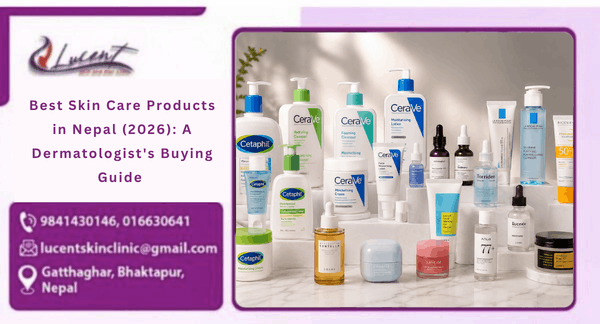
No best skin care products in Nepal exist for everyone. You must consider your skin type, ingredients in the product, and the extreme climatic conditions with harsh sun exposure, low humidity in winters, and high concentrations of dust in the environment. All you require is four products: a mild cleanser, a moisturiser containing ceramide, an effective broad-spectrum sunscreen (SPF 30 or more) and possibly one additional product according to your skin concern.
The skincare products in Nepal have changed a lot over the past five years. Walk into a pharmacy in Kathmandu or skin hospital in Bhaktapur, and you’ll find Korean sheet masks next to French pharmacy creams, plus dozens of Instagram pages selling “genuine imported” products. More choice should make things easier. Instead, it just leaves people unsure what actually works and what’s just trending.
We built this guide the way we’d explain it to a patient in clinic: skin type first, ingredients second, brand name last. We’re also covering something most “best products” lists.
Why Global Skincare Trends Don’t Work in Nepal?
What works in Seoul or London might not work the same for you in Nepal. Factors like elevation and weather influence how your skin behaves. All of these factors are usually ignored in most beauty tips.
- Higher exposure to the sun: Higher altitude implies higher UV ray exposure, no matter what the weather conditions. This accelerates the process of wrinkling and pigmentation faster than one would expect. You need a broad-spectrum sunscreen with at least 30 SPF if you are staying here.
- Sharp climatic changes: In winter, there is dryness and cold that lead to skin drying and peeling. The monsoons increase the humidity to such levels that lead to increased production of oil in your skin. It is not easy to follow the same routine through all seasons.
- Pollution in cities: Polluted air and dust stick to the face all day long in polluted cities such as Kathmandu. These pollutants stay on the skin while you sleep and age your skin. Make sure that you cleanse your face before sleeping.
All the common skin care tips ignore all these factors. If you are living in Nepal, you should give priority to weather and sun rays over the trending products available online.
Figure Out Your Skin Type Before You Buy Anything
Choosing the best skin care products in Nepal starts with identifying your skin type.
Here’s a simple test: wash your face, apply nothing, and check in after about two hours.
- Feels tight, flaky, or rough? That’s dry skin.
- Shiny across the forehead, nose, and chin? That’s oily skin.
- Oily down the middle, dry on the cheeks? Combination skin.
- Stings, itches, or turns red with new products? Sensitive skin.
The following information is structured according to that. Using the moisturizer recommended by your favorite skin influencer, despite having an entirely different type of skin, is definitely the most frequent error made.
The Core Five: What Every Routine Actually Needs
1. Cleanser
A cleanser has only one function: removing grime, sebum, and SPF without damaging your skin’s barrier function. A cleanser that leaves your skin feeling tight and squeaky clean immediately after cleansing is too harsh for everyday use.
- Oily or acne-prone skin does well with a gel or foaming cleanser containing salicylic acid (roughly 0.5–2%).
- Dry or sensitive skin needs a cream or lotion cleanser built around ceramides or glycerin.
- Combination skin usually sits happiest with a low-pH gel cleanser that doesn’t over-strip either zone.
Product Brands available in Nepal: Cetaphil Gentle Skin Cleanser, CeraVe Foaming and Hydrating Cleansers, and Cosrx Low pH Good Morning Gel Cleanser.
2. Moisturizer
Not using a moisturizer due to having oily skin is one of the more frequent mistakes that we encounter in our clinics. Oily skin is mostly dehydrated and produces extra sebum in order to correct dehydration.
Check the label for ceramides, hyaluronic acid, or glycerin these are what actually rebuild the skin barrier and hold moisture in.
- Oily or acne-prone skin: stick to gel-based, oil-free, non-comedogenic formulas.
- Dry or mature skin: go richer and cream-based, especially once winter hits.
Options sold locally: CeraVe Moisturizing Cream, CeraVe Facial Moisturizing Lotion, Minimalist Sepicalm 3% Moisturizer, and Dot & Key’s barrier-repair line.
3. Best Sunscreen in Nepal
Out of all the products in this list, the only one that actually influences the aging process of your skin is the sunscreen, which is unfortunately viewed by most people as an optional product. This is a huge mistake, especially in Nepal, because of its high elevation.
What actually matters on the label:
| Look For | Why |
| Broad-spectrum | Covers both UVA (aging) and UVB (burning) |
| SPF 30 or higher | Baseline for daily wear; go SPF 50 for a full day outdoors |
| PA++++ | Better UVA protection, worth having given local UV levels |
| A formula suited to your skin | Gel for oily skin, cream for dry, mineral for sensitive |
Best sunscreen in Nepal, by skin type:
| Skin Type | Formula to Look For | You’ll Find |
| Oily/acne-prone | Gel or fluid, matte finish | Minimalist Light Fluid Sunscreen SPF 50, Cosrx Aloe Soothing Sun Cream |
| Dry/normal | Hydrating, cream-based | CeraVe AM Facial Moisturizing Sunscreen, Dot & Key Vitamin C+E Sunscreen |
| Sensitive/acne-prone | Mineral (zinc oxide/titanium dioxide) | The Derma Co Ultra Light Zinc Mineral Sunscreen |
| Budget-conscious | Broad-spectrum SPF 30–50 | Skin Aqua, local pharmacy-brand sunscreens |
A couple of things worth repeating because patients ask us constantly: apply sunscreen about 20 minutes before heading out, and reapply every two to three hours if you’re outside or sweating, since most formulas aren’t fully waterproof no matter what the bottle says. And no, the expensive one isn’t automatically better. A well-formulated, affordable sunscreen for Nepali skin with the right SPF and PA rating does the job just as well as a premium import.
4. Serums, If You Want Them
Serums are not necessary, but once you’ve got everything else sorted out, it is a good option for something specific that you’d like to address. Adding one at a time will allow you to see its effects.
- Vitamin C serum in the morning aids dullness, and it’s more important in this area due to the pollution factor.
- Niacinamide soothes oily, problem-prone skin and minimizes pore appearance.
- Hyaluronic acid provides hydration and can be used under moisturizer on any skin.
- Retinol at night, started slowly (two to three times a week to begin), helps with fine lines and acne over time. Always pair it with daytime sunscreen.
Minimalist, The Derma Co, and Dot & Key offer serums with a single active ingredient, allowing you to test one product at a time.
5. Targeted Treatments
When it comes to acne, ingredients like salicylic acid, benzoyl peroxide, or adapalene really do work. It’s also at this point where most people go wrong, overloading their face with actives or using stronger prescription-strength formulations without direction and ending up damaging their skin barrier while leaving themselves with even more hyperpigmentation than before.
Our advice: pick one active, start low, and give it six to eight weeks before deciding whether it’s working or not switching to something new.
Fairness Creams: What You Should Know Before Using Them
Most “best skin care products in Nepal” roundups put a fairness cream near the top. We’re skipping that, on purpose.
Lightening your skin tone isn’t the same thing as improving its health, and it’s not something our dermatologists suggest chasing through over-the-counter creams. The real issue is safety: Nepal’s informal cosmetics market has a documented problem with products carrying high-dose steroids or mercury, often sold with vague or missing labeling. Long-term, these ingredients cause thinning skin, steroid-dependent dermatitis, and pigmentation that rebounds worse than before you started.
If uneven tone or dark spots are the actual concern, that’s legitimate and treatable, just not with an unregulated cream. Brightening actives like vitamin C, niacinamide, or azelaic acid, or an in-clinic treatment, are the safer route.
Red Flags: How to Identify Unsafe or Counterfeit Skin Care Products
There are a lot of skincare products in Nepal, and it is crucial to know how to recognize products that might be unsafe or fake. These are some red flags to look out for when buying something:
- No ingredient list: Good skin care products will have ingredients clearly stated on the packaging. Avoid purchasing if the seller doesn’t have this information.
- Unrealistic claims: Exercise caution with products that make claims like “whiter skin in 7 days” or “complete acne removal overnight. Such an assertion can be deceptive and a sign of an unsafe product.
- No batch number or expiry date: Check Genuine Products for a Batch Number and Expiry Date, which enable consumers to verify authenticity and ensure the product is safe to use.
- Incredible offers for the price: An imported skin care product that is being sold at a much discounted price by a seller who hasn’t been verified on social media could be a counterfeit or may not have been stored properly.
Always buy skin care products from licensed pharmacies, authorized retailers, dermatology clinics that are reputable and trusted online stores whenever possible. By purchasing from a trusted source you can be assured that the products you use are authentic, safe and appropriate for your skin type.
Where to Actually Buy Skin Care Products in Nepal
Where you buy matters almost as much as what you buy.
- Pharmacies and dermatology clinics should be your primary source for products containing active ingredients such as retinol or benzoyl peroxide; someone there will warn you if a certain product isn’t suitable for you.
- Reputable online stores, those that have a clear return policy, physical location address, and product photographs to show, should be reliable when buying routine products such as cleansers and sunscreen creams.
- Sites such as Daraz and others do fine for well-known international brands, provided you have a look at the seller’s ratings first, and the prices aren’t dramatically below the actual brand price level.
- Instagram or TikTok sellers are the riskiest sources, particularly for products advertised as “whitening” and “miracle”. Running away from questions regarding the product’s components will be a dead giveaway.
If you are not sure about the authenticity of a particular product, feel free to bring it to a consultation. We’ll only need a couple of minutes to check the list of ingredients.
A Short Glossary, Because Labels Are Confusing
- Ceramides – Help strengthen the skin barrier and lock in moisture. Ideal for dry and sensitive skin.
- Hyaluronic Acid – Draws moisture into the skin, keeping it hydrated and plump. Suitable for all skin types.
- Niacinamide (Vitamin B3) – Reduces redness, controls excess oil, minimizes pores, and helps improve mild pigmentation.
- Salicylic Acid (BHA) – Cleans deep inside pores, making it effective for acne, blackheads, and oily skin.
- Glycolic Acid & Lactic Acid (AHAs) – Gently exfoliate the skin to improve texture and brighten the complexion.
- Retinol/Retinoids – Boost skin cell turnover to improve acne, fine lines, and uneven texture. Use gradually and always wear sunscreen.
- Broad-Spectrum – Indicates that a sunscreen protects against both UVA and UVB rays.
- Non-Comedogenic – Formulated to minimize pore clogging, making it suitable for oily and acne-prone skin.
Quick Reference: Products by Skin Type
| Skin Type | Cleanser | Moisturizer | Sunscreen |
| Oily/acne-prone | Cosrx Low pH Gel Cleanser | Oil-free gel moisturizer | Minimalist Light Fluid SPF 50 |
| Dry | CeraVe Hydrating Cleanser | CeraVe Moisturizing Cream | CeraVe AM Facial Sunscreen |
| Sensitive | Cetaphil Gentle Skin Cleanser | Fragrance-free ceramide cream | Mineral sunscreen (zinc oxide) |
| Combination | Low pH foaming cleanser | Lightweight, non-greasy lotion | Gel-based broad-spectrum SPF 30+ |
Treat this as a starting point, not a rulebook. See how your skin actually responds over a few weeks and adjust from there.
Building a Simple Skincare Routine
You don’t need ten steps to take care of your skin. Most people are fine with this:
Morning: Cleanser → (Vitamin C serum, optional) → Moisturizer → Sunscreen (SPF 30+)
Evening: Cleanser (double-cleanse if you wore sunscreen or makeup) → (Targeted treatment, optional) → Moisturiser
One habit worth keeping: patch test anything new on your forearm for a week to ten days before it goes anywhere near your face. It’s a small step, but it saves you from a much bigger problem down the line.
Common Skincare Mistakes to Avoid
Our dermatologists frequently see these common mistakes that can do more harm than good:
- Piling on too many actives at once: Retinol, vitamin C, and an exfoliating acid, all in the same routine, tends to irritate skin instead of improving it.
- Skipping sunscreen because it’s cloudy: UVA rays don’t care about cloud cover, and skin damage adds up either way.
- Switching products too soon: Give a routine six to eight weeks before deciding it’s not working.
- Buying based on what’s trending instead of what your own skin type and concerns actually call for.
- Using a strong exfoliant and retinol on the same night: That combination usually ends in dryness and irritation, not better results.
When Skincare Products Aren’t Enough
A proper skincare routine helps maintain the health of the skin and may even remedy smaller problems, but a skincare routine cannot accomplish everything. Should your acne problems persist, should your scars, uneven pigmentation and wrinkles not respond to your skincare routine over the course of several months, then you need to go see a dermatologist.
Procedures like chemical peels, HydraFacial, microneedling or skin boosters can fix things that can never be fixed by any product.
The Short Version
- Pick products for your skin type, not because they’re trending or an influencer swears by them.
- Wear broad-spectrum sunscreen, SPF 30 or higher, every single day.
- Look for ceramides, hyaluronic acid, niacinamide, and vitamin C. These actually do something.
- Stay away from fairness or whitening creams that don’t list their ingredients.
- Give a new routine six to eight weeks before judging it, and always patch test first.
- If nothing’s improving despite doing everything right, that’s your cue to see a dermatologist.
Conclusion
The best skin care products in Nepal don’t come from those that have the fanciest advertisement or claim the most unbelievable benefits from their labels. The best skincare products for you are the ones that suit your skin type, that have ingredients that really work, and you use them for long enough to see the results. A skincare routine with just five steps a day will win against a 10-step skincare regimen almost always.
Living in this place comes with some things that cannot be missed: sunscreen regardless of the time of year, increased hydration in the dry period, and avoidance of any bleaching substances that come with temporary results but cause harm in the end. Just do these basic things, and within weeks, your problems will be solved.
If your skin still isn’t cooperating after a few months of doing everything right, that’s not a sign to buy more products. It’s a sign to talk to someone. Our team at Lucent Skin & Hair Clinic in Bhaktapur can take a proper look, figure out what’s actually going on, and build a routine or a treatment plan around your skin.
Frequently Asked Questions
What’s the best skin care product in Nepal for oily skin?
A light gel cleanser with salicylic acid, an oil-free moisturiser, and sunscreen with a matte finish. This combination works well for oily and acne-prone skin compared to any heavy or creamy products that may become greasy.
What is the best sunscreen in Nepal?
Honestly, it’s whichever broad-spectrum, SPF 30+, PA++++ sunscreen you’ll actually wear every single day. Gel formulas suit oily skin, creams suit dry skin, and mineral sunscreens suit sensitive skin. Minimalist, Cosrx, CeraVe, and The Derma Co all make solid options you can find locally
Are Korean skin care products good for Nepali skin?
Yes, there are many of them, especially the cleansing gels, hydrating serums, and light sunscreen products. However, just do not purchase anything only because it is in trend, as there will be an ingredients’ list that should suit your particular skin type.
How do I know if a skin-whitening product is unsafe?
Beware of no ingredient list, too-good-to-be-true rapid results, or lack of batch numbers or expiration dates. Creams containing steroids and mercury have been proven to exist in the black market in this country, and the damage they can do to your skin is irreversible. Purchase from reputable pharmacies only.
Do I need a separate night cream?
Not really. A good moisturizer usually covers both day and night, with sunscreen added on top during the day. A richer, ceramide-heavy night cream can help in winter or if your skin runs dry.
How long should I use a new skin care product before deciding if it’s working?
Give it six to eight weeks of consistent use. The one exception: if you see irritation or an allergic reaction, stop immediately, don’t wait it out.
When should I stop trying products and see a dermatologist instead?
If acne persists, pigmentation shows up out of nowhere, scarring develops, or irritation won’t settle down after two to three months of a reasonable, consistent routine, that’s the point to bring in a professional rather than keep experimenting on your own.
This article is for general information and doesn’t replace an actual consultation with a qualified dermatologist. Everyone’s skin is different, and a dermatologist at Lucent Skin & Hair Clinic can build a routine or recommend an in-clinic treatment suited to yours specifically.
Popular Posts


Recent Posts
-

Hair Treatment in Nepal: Types, Costs & Which Treatment Is Best?
Jul 12, 2026 | Lucent
-

How to Choose the Best Dermatologist in Nepal?
Jul 08, 2026 | Lucent
-
Best Skin Care Products in Nepal (2026): A Dermatologist’s Buying Guide
Jul 06, 2026 | Lucent
-

PRP Hair Treatment in Nepal: Cost, Process, and Results (2026 Guide)
Jul 03, 2026 | Lucent
-
Is Laser Hair Removal Safe? Risks, Side Effects & Safety Guide
Jun 11, 2026 | Lucent
-

Wrinkles on Face: Causes, Types, Prevention and Treatment Guide
Jun 11, 2026 | Lucent
-
Best Laser Hair Removal in Kathmandu – Safe & Long-Lasting Hair Reduction
Jun 11, 2026 | Lucent
-

Best Face Yoga Exercises for a Lifted, Toned & Youthful Face
May 18, 2026 | Lucent