
Hair loss is one of the most common problems among men worldwide. In Nepal, many men experience thinning hair between their 20s and 30s while they worry about going bald. The most common cause is male pattern baldness, which people also refer to as androgenetic alopecia. The condition affects hair growth by establishing a predetermined pattern of hair loss, which results in decreased hair thickness.
Male pattern baldness does not typically result in significant health complications. The condition impacts self-esteem while making it difficult for people to lead their everyday lives. People can treat male baldness through their understanding of its different types and causes, and available baldness treatment in Nepal.
This guide explains male pattern baldness in simple language. It helps you make smart choices and see how modern treatments can slow or stop hair loss.
What Is Male Pattern Baldness?
Male pattern baldness, which scientists name androgenic alopecia, occurs as a widespread condition among men. The condition develops because of genetic factors and the presence of male hormones in individuals. Over time, hair follicles shrink, making hair thinner, shorter, and lighter. Some follicles may stop producing hair completely.
It most often affects specific areas of the scalp:
- The front hairline, where the hair begins to recede backwards
- The temples on the sides of the forehead
- The crown (top of the head) is where thinning and bald spots are common
It doesn’t cause pain, but hair loss can affect confidence and emotions.
Baldness Causes in Men

Male pattern baldness is caused by genes and hormones. Other health or lifestyle factors can make it worse.
- Genetics
- Family history is the strongest factor in male pattern baldness.
- Baldness in close relatives increases your risk
- This condition can be inherited from either side of the family.
- Hormones (DHT)
- A hormone called dihydrotestosterone (DHT) plays a key role in male pattern baldness.
- In men sensitive to DHT, hair follicles gradually shrink, a process called miniaturization.
- Shrinking follicles produce thinner hair, and eventually, some follicles stop producing hair entirely.
- Age
- Hair loss can begin in the teenage years, but it becomes more common with age.
- The longer hair follicles are exposed to DHT, the more hair thins.
- Other Factors That Can Worsen Hair Fall
These factors don’t cause male pattern baldness, but can make hair loss happen faster.
- Severe stress
- Poor nutrition or vitamin deficiencies
- Smoking
- Illness or major surgery
Types of Male Pattern Baldness (Norwood Scale)
Male pattern baldness usually follows a set pattern. Doctors use the Hamilton–Norwood scale to classify the stages of hair loss. Your hair loss stage shows the best treatment: medicine, PRP, or hair transplant in Nepal.
In the early stages, hair thinning may be hard to notice. It often starts with a small recession at the temples or a tiny thinning spot on the crown. As hair loss progresses, the changes become more visible.
Stage 1: Hairline appears full and normal, with no visible thinning.
Stage 2: The hairline begins to recede slightly at the temples. Hair on the crown remains intact, and changes may be subtle.
Stage 3: Hair loss becomes clearly noticeable. The hairline forms an “M” shape as the temples recede further. The beginning stage of hair loss shows both frontal hair thinning and top head shaving.
Stage 4: The hairline continues to recede while the bald area at the crown becomes more extensive. A narrow band of hair may still connect the front and crown.
Stage 5: The front bald area and the crown bald area begin to show signs of merging. Only a small bridge of hair separates the two patches.
Stage 6: The bridge of hair disappears completely. The head has lost most of its hair except for the hair that remains on the sides and back.
Stage 7: The scalp only shows a narrow strip of hair that extends across the sides and back. The top of the head is almost completely bald.
Knowing your hair loss stage is important. Early treatments like minoxidil, finasteride, or PRP can slow hair loss. Advanced hair loss may need a hair transplant in Nepal.
How Doctors Diagnose Male Pattern Baldness
If your hair is thinning, a specialist can see and suggest treatment. Diagnosis usually involves:
- Examining hair loss: Look for a receding hairline, a thin crown, or a wide part.
- Family history: Baldness is mostly genetic. Your doctor may inquire about your father’s and grandfather’s hair loss history
- Scalp check: The scalp examination allows for the identification of scalp conditions and active scalp inflammation
- Dermoscopy (if needed): The dermoscope provides magnification to examine hair follicles while the device assesses hair density, follicle size reduction and scalp condition.
- Blood tests (sometimes): detect health conditions that lead to hair loss.
Starting treatment early usually gives better results and slows further hair loss.
Baldness Treatment in Nepal
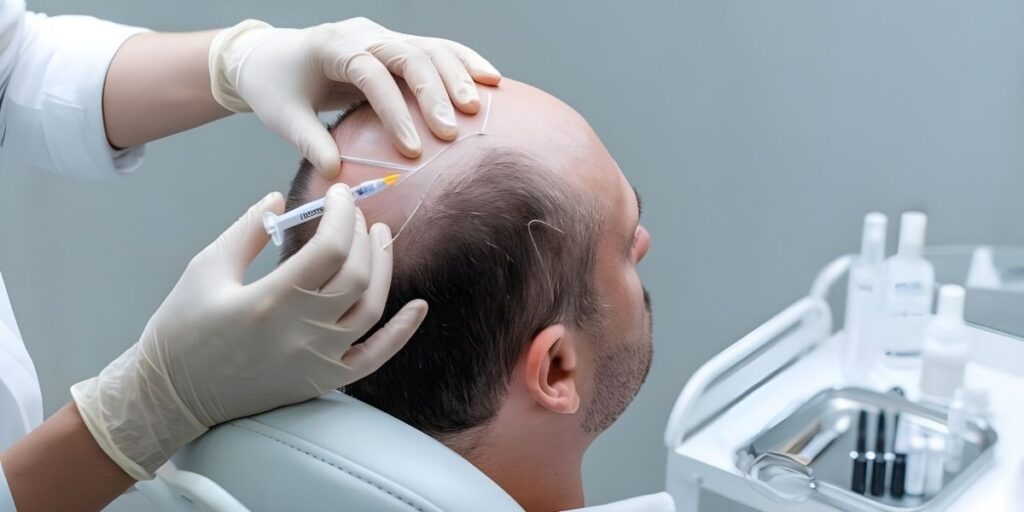
Genetic hair loss does not have a permanent solution yet, but treatment can reduce its progression while increasing hair thickness. The optimal treatment choice requires evaluation of your baldness level, your medical condition, and your treatment preferences.
1. Minoxidil (Topical Treatment)
The hair growth treatment Minoxidil exists in two forms, which include a liquid version and a foam version that users apply directly to their scalp. The treatment extends the duration of hair growth, and it results in increased thickness for hair strands. Using it consistently is important. Stopping may cause hair to thin again. The optimal time to use minoxidil treatment starts at its initial application and continues until its final usage.
2. Finasteride (Oral Medication)
Finasteride (Oral Medication) Finasteride functions as an oral medication that decreases DHT levels, which causes hair follicle reduction. The treatment aids in reducing hair loss while promoting hair regrowth. A physician needs to oversee the medication because it interacts with hormonal systems. Many men use finasteride together with minoxidil for better results.
3. PRP (Platelet-Rich Plasma) Therapy
PRP therapy uses your blood to help hair grow stronger and thicker. It is non-surgical and minimally invasive. PRP is combined with other treatments to boost results in moderate hair thinning.
4. Low-Level Laser Therapy (LLLT)
LLLT is a technology that utilises lasers to enhance the growth of hair and blood flow in the scalp. It is an effective treatment for halting the loss of hair and beginning to stimulate the growth of hair in users experiencing the first signs of male pattern baldness. LLLT provides men with a painless, noninvasive treatment option that keeps them away from both medications and surgical procedures.
5. Hair Transplant in Nepal
A hair transplant in Nepal can be considered a permanent solution for people who are experiencing severe hair loss. The process involves relocating healthy hair from donor sites, which are found at the back and sides of the head, to areas where the hair is needed. FUE involves the extraction of individual hair follicles, resulting in less scarring, as opposed to FUT, where a whole strip of the scalp is harvested and then broken down into smaller pieces. The hair that you will get from the transplant procedure will stay on your head for the rest of your life while giving you natural-looking results.
The matter requires immediate attention. Selecting the appropriate treatment option during a particular phase of hair loss helps to maintain existing hair while achieving optimal treatment outcomes. Professionals identify the extent of hair loss, which enables them to suggest effective and secure natural solutions.
How to Control Hair Fall?
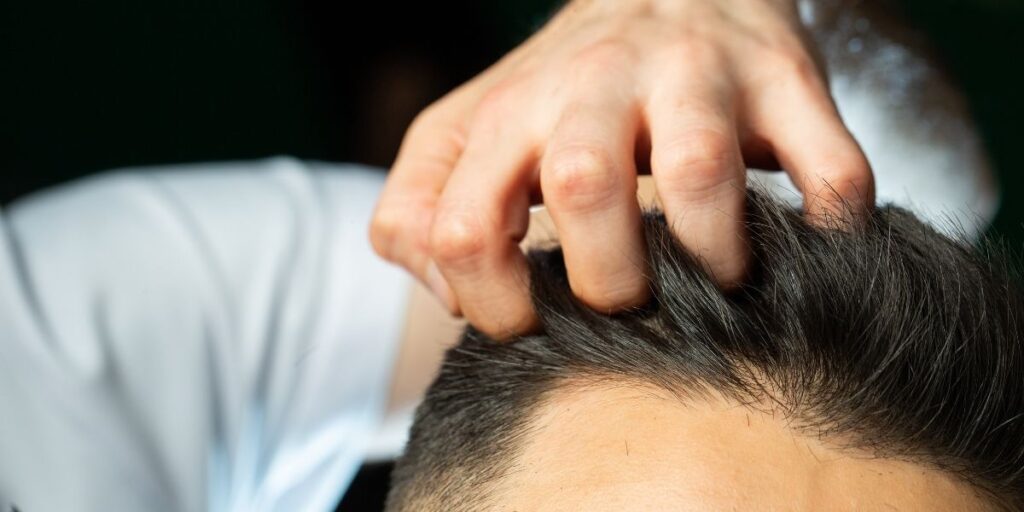
You have permanent genetic makeup, but developing healthy habits will enable your body to produce more hair while enhancing your treatment outcomes.
The following guidelines will help you maintain better health.
Eat Protein-Rich Foods
The body requires protein from food to build the structure of hair, which contains keratin. The consumption of protein-rich foods such as eggs, fish and lentils enables people to maintain their hair health and strength.
Get Essential Vitamins and Minerals
People need to consume essential vitamins and minerals to maintain their physical health. The body requires iron, zinc, vitamin D and biotin to keep its hair in a strong and healthy condition. The lack of these nutrients will cause hair loss to become worse. The body needs essential vitamins, which fruits, vegetables, nuts and grains provide to maintain healthy hair. The body requires essential vitamins from fruits and vegetables, nuts and grains to maintain healthy hair.
Avoid Harsh Chemicals and Treatments
Harsh chemical ingredients, heated styling methods and strong hair products will cause damage to hair. The use of gentle hair care methods, together with minimised heat and colouring activities, will prevent hair loss from occurring.
Manage Stress Effectively
Chronic stress causes your body to interrupt its natural hair growth process, which results in increased hair loss. The activities of meditation, yoga, exercise and hobbies will help people reduce their stress levels, which will promote their hair growth.
Do Not Smoke
Smoking restricts blood circulation to the scalp, which causes permanent harm to hair follicles. The body experiences better blood flow after someone quits smoking, which leads to healthier scalp conditions that promote hair growth.
Maintain Gentle Hair Care Practices
Handle your hair with gentleness while you keep your distance from tight hairstyles and use mild shampoo, which helps to protect your hair from breakage.
Healthy habits support treatments, but medical care is needed. Early care helps keep hair thick and strong.
When Should You Visit a Hair Specialist?
Specialist consultation leads to better hair loss prevention results when conducted at the earliest possible moment.
The following signs serve as important indicators that you need to visit a professional for assistance.
Rapidly Receding Hairline
Your hairline shows rapid recession, which affects your temples. The first signs of baldness develop when your hairline starts to recede at a rapid pace.
Thinning at the Crown
A specialist needs to be consulted when a person experiences crown hair thinning or bald spots. Early treatment can help keep your hair dense.
Persistent Hair Fall
If hair keeps falling out for months, even with good care, it may signal a hair loss problem. A specialist can determine the underlying problem and deliver specific medical solutions.
Family History of Baldness
Male pattern baldness is largely genetic. Your risk of early hair loss increases when your close male relatives experience their first signs of baldness. The condition requires early treatment because its symptoms will progress to more serious stages.
Desire for Early Treatment
Early diagnosis and treatment generally provide the best outcomes. The initial treatments, which include medication, PRP and lasers and hair transplant in Nepal work to maintain hair health.
Why Professional Treatment Matters?
Hair loss requires medical treatment because it extends beyond appearance. Specialised medical professionals provide patients with safe and effective treatment options.
The following reasons show why professional assistance needs to be obtained.
Accurate Diagnosis
The causes of hair loss include genetic factors, hormonal imbalances, eating habits, and conditions of the scalp. A professional can identify the cause and provide the correct solution.
Evidence-Based Treatments
Minoxidil, finasteride, PRP, and hair transplant in Nepal can slow down hair loss and increase the thickness of hair. Unproven remedies can waste time and delay results.
Safe and Monitored Care
Professional treatment ensures that medications or procedures are used safely. Finasteride needs careful use, and PRP or transplants should be done by specialists.
Better Long-Term Results
Early intervention with professional care often provides better outcomes than starting treatment late. Specialists can combine treatments to protect hair and prevent more loss.
It is always advisable to consult a professional rather than relying on home remedies or over-the-counter treatments. This technique ensures the best results because it reduces possible risks while also stimulating the growth of healthier and stronger hair.
Conclusion
Male pattern baldness is a common problem, but it can be controlled with the proper approach. Male pattern baldness has different stages, and it is necessary to recognise it early and start treating it. The process of hair loss can be slowed down, and healthy hair can be preserved through knowledge of its various types of male pattern baldness and their underlying causes. The correct application of modern hair loss treatments in Nepal, which include minoxidil, finasteride, PRP therapy and laser therapy and hair transplant in Nepal provides patients with natural results that last for an extended period.
The treatment programs at Lucent Skin and Hair Clinic are designed to meet the unique hair loss needs of each patient based on their current hair loss pattern. The process enables you to create safe choices which lead to optimal results for your hair health.
People who experience hair loss should schedule an appointment with our specialists, who will determine their optimal treatment solution.
FAQs
1. What is male pattern baldness?
Male pattern baldness, which doctors call androgenic alopecia, functions as a hereditary hair loss disorder that follows particular development patterns. which begin with either a receding hairline or hair thinning on the crown.
2. What causes baldness in men?
Baldness in men includes genetic factors and the hormone DHT, which causes hair follicles to shrink. The main causes of hair loss stem from genetic factors and DHT, but ageing and lifestyle factors, which include stress, poor diet, and smoking, also contribute to additional hair loss.
3. Can hair fall be controlled naturally?
You can promote hair growth by eating protein-rich foods, taking vitamins, practising gentle hair care, managing stress and stopping smoking. This will help you maintain healthy hair, but requires professional treatment as well.
4. What treatments are available in Nepal?
The medical treatments which exist in Nepal include Minoxidil, which treats hair loss, Finasteride, which decreases DHT levels, PRP treatment, which enhances hair follicle strength and Low-Level Laser Therapy and Hair Transplant FUE/FUT, which provides solutions for advanced baldness.
5. When should I see a hair specialist?
Consult a hair specialist if your hairline is receding rapidly, your crown is thinning, hair fall is not stopping, or if there is a family history.
Popular Posts


Recent Posts
-

PRP Hair Treatment in Nepal: Cost, Process, and Results (2026 Guide)
Jul 03, 2026 | Lucent
-

Is Laser Hair Removal Safe? Risks, Side Effects & Safety Guide
Jun 11, 2026 | Lucent
-

Wrinkles on Face: Causes, Types, Prevention and Treatment Guide
Jun 11, 2026 | Lucent
-

Best Laser Hair Removal in Kathmandu – Safe & Long-Lasting Hair Reduction
Jun 11, 2026 | Lucent
-

Best Face Yoga Exercises for a Lifted, Toned & Youthful Face
May 18, 2026 | Lucent
-

How to Identify the Best Skin Clinic in Kathmandu for Safe Treatments?
May 18, 2026 | Lucent
-

Hydrafacial Benefits for Glowing and Healthy Skin
May 18, 2026 | Lucent
-

Laser Hair Removal Price in Nepal: What You Should Expect
May 03, 2026 | Lucent