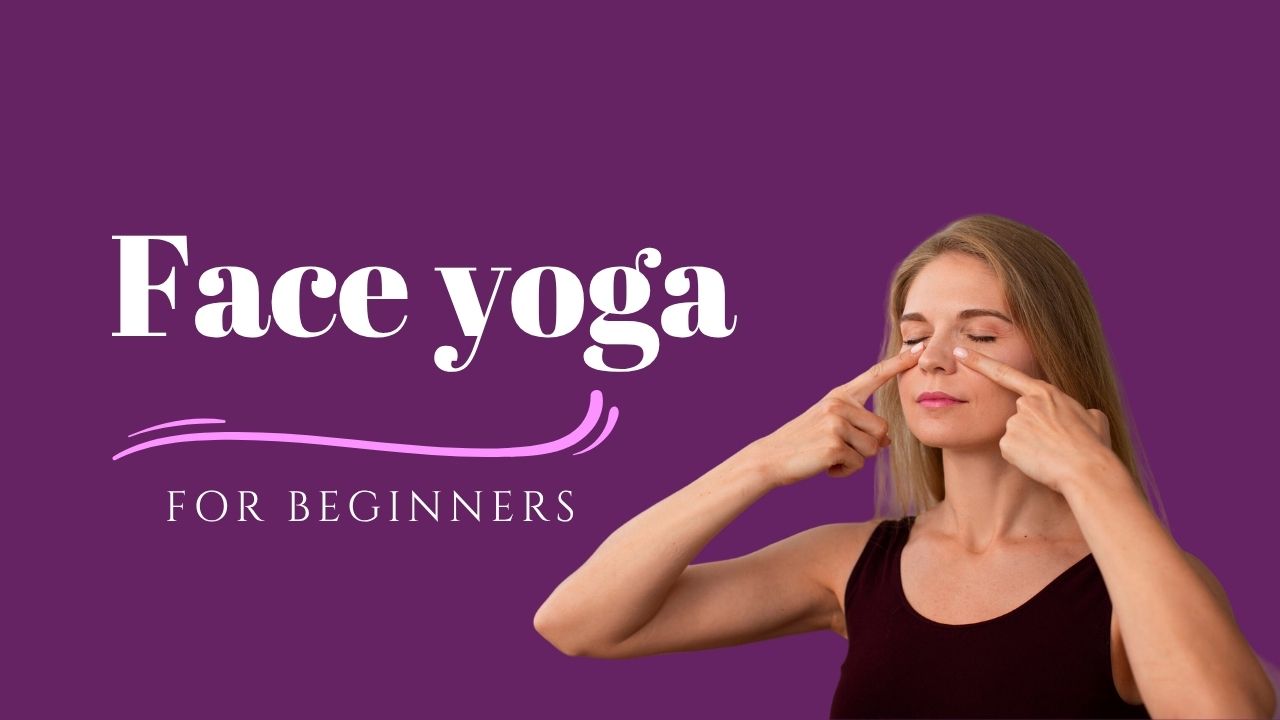
Face yoga exercises are simple facial movements that help activate, stretch, and relax the muscles of your face. Some of the best face yoga exercises include the Lion Face, Cheek Puffer, Fish Face, Big O, Eyebrow Lift, Swan Neck, and Jawline Lift. Practicing these exercises for 10–15 minutes, 4–5 times per week may help improve facial tone, support blood circulation, release tension, and give your face a naturally refreshed look.
Face yoga is becoming popular because many people want a natural, non-invasive way to care for their face, jawline, cheeks, eyes, and neck. While results vary from person to person, a consistent face yoga routine can be a relaxing and effective addition to your skincare and wellness routine.
What Is Face Yoga?
Face yoga is a set of facial exercises designed to move and strengthen the muscles under your skin. Just like body yoga helps stretch and tone different body parts, face yoga focuses on the muscles around your cheeks, jawline, forehead, eyes, mouth, and neck.
The goal of face yoga is not to change your face overnight. Instead, it helps support better facial awareness, muscle engagement, relaxation, and circulation. Many people use face yoga as part of their anti-aging skincare routine, natural glow routine, or facial toning practice.
A strong face yoga routine usually includes:
- Facial stretching
- Muscle activation
- Gentle massage
- Breathing
- Tension release
- Neck and jawline movements
Competitor analysis shows that ranking pages often mention benefits, exercise names, and result timelines, but many of them lack a complete step-by-step structure. A more detailed article with exercises, routines, safety tips, FAQs, and trust-building explanations gives your page a stronger chance to compete.
Benefits of Face Yoga Exercises
Face yoga exercises may support both beauty and relaxation goals. When done gently and consistently, they can help improve how your face feels and looks over time.
1. Helps Tone Facial Muscles
Your face has many small muscles that control expressions, smiles, eye movement, and jaw movement. Face yoga helps activate these muscles through repeated movements and holds.
2. Supports a Firmer-Looking Face
With regular practice, facial exercises may help the cheeks, jawline, and lower face appear more lifted and toned. However, results depend on age, skin elasticity, lifestyle, and consistency.
3. Improves Blood Circulation
Face yoga movements and light facial massage may help increase blood flow to the face. This can give the skin a fresher and more glowing appearance.
4. Releases Facial Tension
Many people hold tension in their jaw, forehead, eyes, and mouth area. Exercises like Lion Face and Big O may help relax tight facial muscles.
5. Supports Jawline and Neck Area
Some face yoga exercises target the lower face, chin, and neck. These may help improve muscle engagement around the jawline and reduce stiffness in the neck area.
6. Can Be Done at Home
You do not need expensive tools or equipment. Most face yoga exercises can be done at home using only clean hands, a mirror, and a few minutes of practice.
Best Face Yoga Exercises to Try at Home
Below are some of the best face yoga exercises for beginners. These exercises target different areas of the face, including the cheeks, eyes, forehead, jawline, chin, and neck.
1. Lion Face Exercise

Best for: Full face, jaw tension, eyes, and stress release
The Lion Face is one of the most popular face yoga exercises because it stretches the entire face. It may help release tension around the jaw, mouth, forehead, and eyes.
How to Do It
- Sit comfortably with your back straight.
- Take a deep breath in through your nose.
- Open your mouth wide.
- Stick your tongue out and stretch it downward.
- Open your eyes wide.
- Exhale strongly through your mouth.
- Hold for 5–10 seconds.
- Relax your face and repeat 3–5 times.
Common Mistake to Avoid
Do not force your jaw too much. Keep the movement strong but comfortable.
2. Cheek Puffer Exercise

Best for: Cheeks, mid-face, and facial fullness
The Cheek Puffer is a simple face yoga exercise that targets the cheek muscles. It may help activate the mid-face area and improve facial muscle control.
How to Do It
- Sit or stand with your face relaxed.
- Fill both cheeks with air.
- Hold the air for 10–15 seconds.
- Move the air from the left cheek to the right cheek.
- Continue moving the air side to side for 20–30 seconds.
- Release slowly.
- Repeat 3–5 times.
Common Mistake to Avoid
Do not puff your cheeks too aggressively. Keep the pressure moderate.
3. Fish Face Exercise
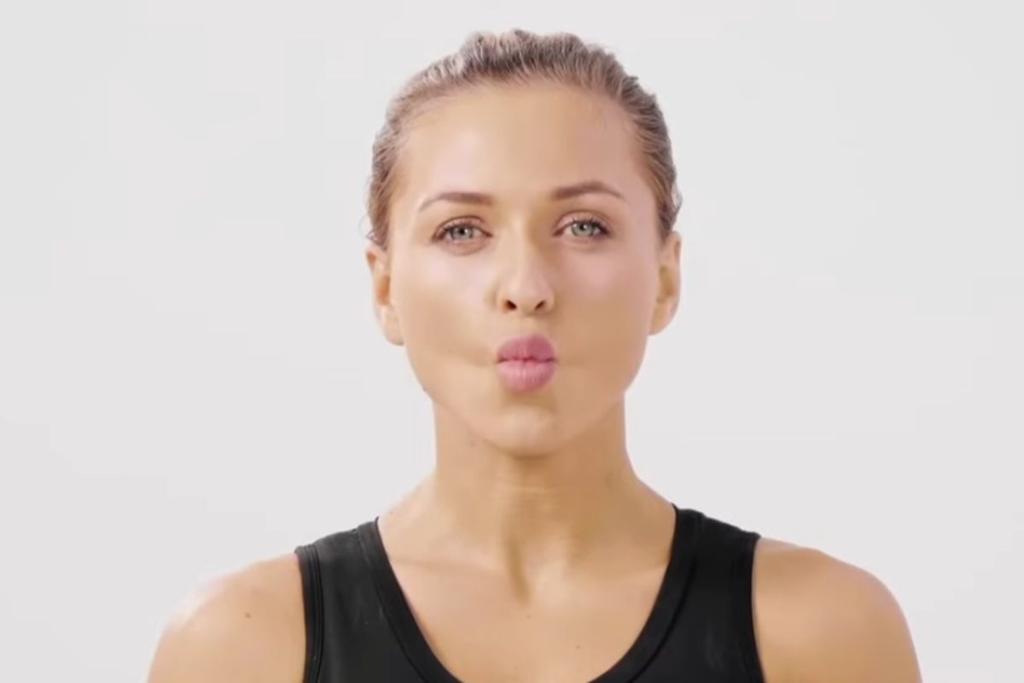
Best for: Cheeks, smile lines, and mid-face toning
The Fish Face exercise is commonly used to target the cheek area. It activates the muscles around the cheeks and lips.
How to Do It
- Suck your cheeks inward.
- Make a fish-like face with your lips.
- Try to smile gently while holding the position.
- Hold for 5–10 seconds.
- Relax your face.
- Repeat 5–8 times.
Common Mistake to Avoid
Avoid wrinkling the area around your eyes too much. Focus on cheek engagement.
4. Big O Exercise

Best for: Mouth area, cheeks, jaw, and facial relaxation
The Big O exercise helps stretch the lower face and mouth area. It is also useful for people who hold tension around the jaw.
How to Do It
- Open your mouth into a long “O” shape.
- Keep your teeth hidden behind your lips.
- Look upward gently.
- Keep your forehead relaxed.
- Hold for 10 seconds.
- Relax and repeat 3–5 times.
Common Mistake to Avoid
Do not wrinkle your forehead while looking up. Keep the upper face soft.
5. Eyebrow Lift Exercise
Best for: Forehead, eyebrows, and eye area
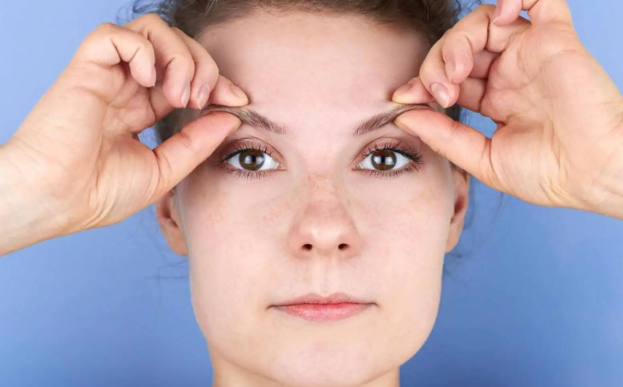
The Eyebrow Lift exercise targets the forehead and brow area. It may help improve awareness of forehead tension and support a lifted appearance around the eyes.
How to Do It
- Place your index fingers above your eyebrows.
- Gently press the skin downward.
- Try to lift your eyebrows upward against the light resistance.
- Hold for 5 seconds.
- Relax and repeat 8–10 times.
Common Mistake to Avoid
Do not press too hard. The skin around the eyes and forehead is delicate.
6. The Owl Exercise

Best for: Eye area, brow tension, and upper face
The Owl exercise is useful for relaxing the eye area and improving control around the brows.
How to Do It
- Make a “C” shape with both hands.
- Place your index fingers above your eyebrows.
- Place your thumbs gently below your eyes.
- Open your eyes wide.
- Try not to wrinkle your forehead.
- Hold for 10 seconds.
- Relax and repeat 3–5 times.
Common Mistake to Avoid
Avoid pulling the skin around the eyes. Use light support only.
7. Swan Neck Exercise
Best for: Neck, jawline, and lower face
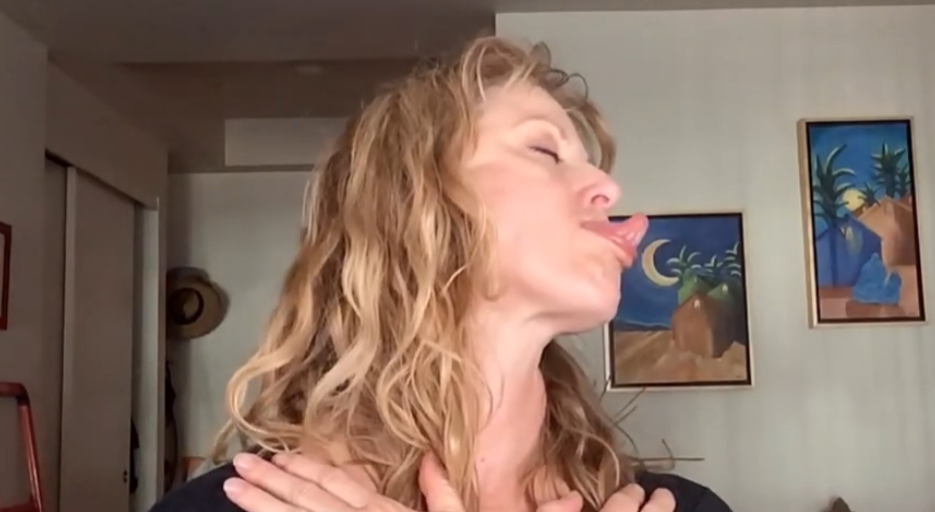
The Swan Neck exercise targets the neck and jawline area. It is especially useful for people who want to include the lower face in their routine.
How to Do It
- Sit upright with your shoulders relaxed.
- Turn your head slightly to one side.
- Lift your chin at a 45-degree angle.
- Pucker your lips gently.
- Hold for 10 seconds.
- Return to the center.
- Repeat on the other side.
- Do 3 rounds on each side.
Common Mistake to Avoid
Do not overstretch your neck. Keep the movement slow and controlled.
8. Jawline Lift Exercise
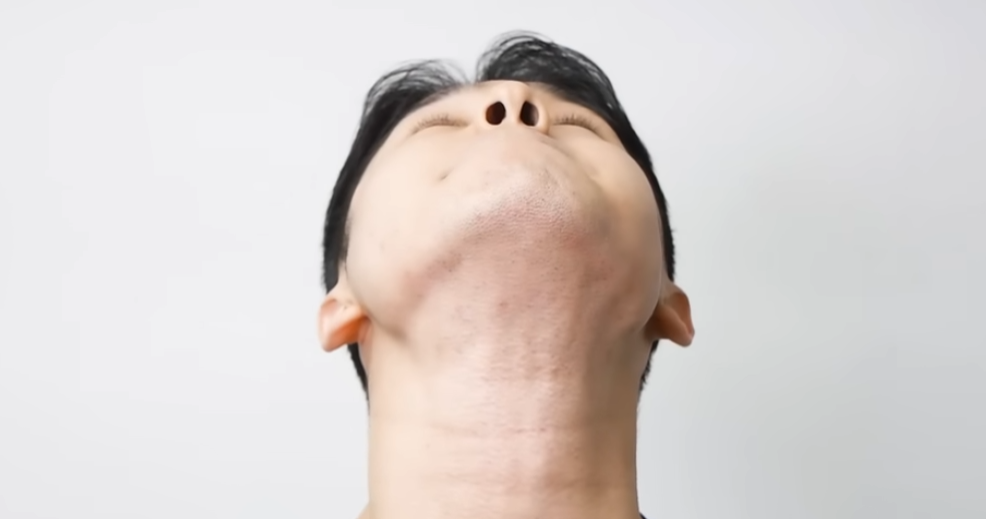
Best for: Jawline, chin, and double chin area
The Jawline Lift exercise helps activate the muscles around the chin and lower face.
How to Do It
- Sit or stand with your spine straight.
- Tilt your head slightly upward.
- Press your tongue gently to the roof of your mouth.
- Swallow slowly while keeping your chin lifted.
- Relax and return to a neutral position.
- Repeat 8–10 times.
Common Mistake to Avoid
Do not push your head too far back. Keep your neck comfortable.
9. Forehead Smoother Exercise
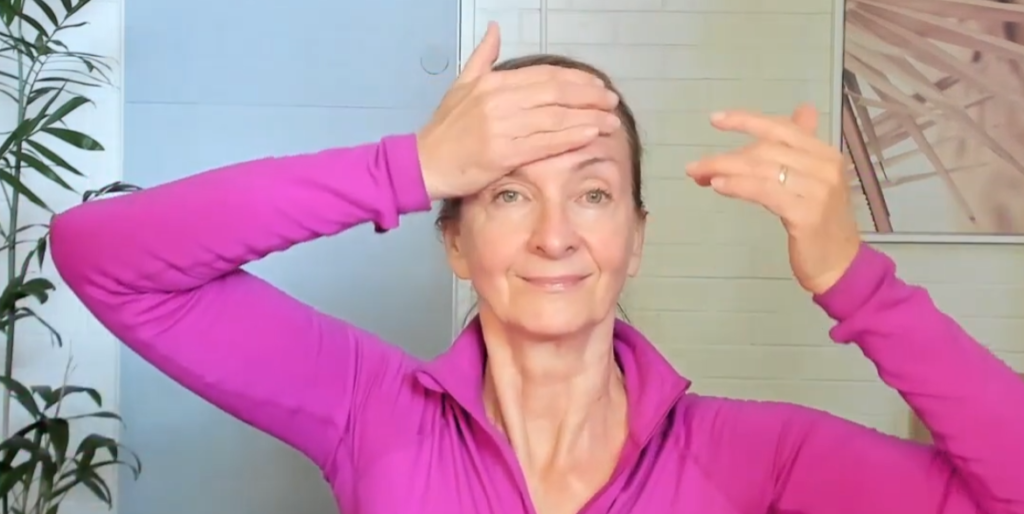
Best for: Forehead tension and expression lines
The Forehead Smoother is a gentle massage-based face yoga movement that helps relax the forehead.
How to Do It
- Place both palms on your forehead.
- Gently smooth the skin outward toward the temples.
- Use light pressure only.
- Repeat for 30–60 seconds.
- Keep your breathing slow and relaxed.
Common Mistake to Avoid
Do not drag dry skin. Use a light serum or facial oil if needed.
10. Neck Stretch Exercise
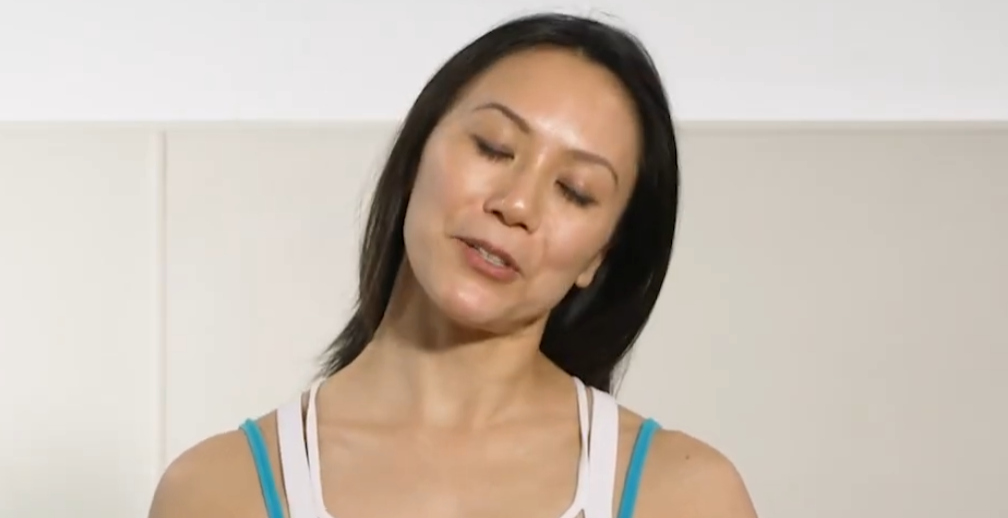
Best for: Neck, lower face, and under-chin area
The Neck Stretch helps release tension in the neck and lower face.
How to Do It
- Sit upright.
- Relax your shoulders.
- Slowly tilt your head back.
- Feel a gentle stretch in the front of your neck.
- Move your head slowly from side to side.
- Continue for 30 seconds.
- Return to a neutral position.
Common Mistake to Avoid
Do not perform this exercise quickly. Slow movement is safer and more effective.
Simple Face Yoga Routine for Beginners
Here is a simple beginner-friendly face yoga routine you can follow at home.
| Goal | Exercise | Time |
| Full face relaxation | Lion Face | 1 minute |
| Cheek toning | Cheek Puffer | 2 minutes |
| Cheek lift | Fish Face | 2 minutes |
| Eye area | Owl Exercise | 2 minutes |
| Forehead tension | Eyebrow Lift | 2 minutes |
| Jawline | Jawline Lift | 2 minutes |
| Neck | Swan Neck | 2 minutes |
Total time: Around 10–15 minutes.
5-Minute Face Yoga Routine for Busy Beginners
If you are new to face yoga or do not have much time, start with this quick routine.
- Lion Face – 1 minute
- Cheek Puffer – 1 minute
- Fish Face – 1 minute
- Eyebrow Lift – 1 minute
- Swan Neck – 1 minute
This short routine is ideal for mornings, before skincare, or before going to bed.
10-Minute Face Yoga Routine for Glowing Skin
This routine focuses on circulation, relaxation, and gentle facial toning.
- Lion Face – 1 minute
- Big O Exercise – 1 minute
- Cheek Puffer – 2 minutes
- Fish Face – 2 minutes
- Owl Exercise – 1 minute
- Jawline Lift – 2 minutes
- Forehead Smoother – 1 minute
Practice this routine 4–5 times per week for best consistency.
Face Yoga Exercises for Jawline and Double Chin
If your main goal is to define the jawline or work on the under-chin area, focus on lower-face exercises.
Best exercises for jawline:
- Jawline Lift
- Swan Neck
- Neck Stretch
- Big O Exercise
- Tongue-to-roof movement
These exercises may help activate the muscles around the chin, jaw, and neck. However, if your concern is fat under the chin, face yoga alone may not be enough. Overall body composition, posture, hydration, and lifestyle also play an important role.
Face Yoga Exercises for Cheeks
If you want to target sagging cheeks or improve cheek muscle engagement, include cheek-focused exercises.
Best exercises for cheeks:
- Cheek Puffer
- Fish Face
- Big O Exercise
- Smile Hold
- Cheek Lift
These exercises help activate the mid-face muscles and may support a fuller, more toned cheek appearance over time.
Face Yoga Exercises for Eyes and Forehead
The eye and forehead areas are delicate, so exercises should be done gently.
Best exercises for eyes and forehead:
- Eyebrow Lift
- Owl Exercise
- Forehead Smoother
- Gentle tapping around the eyes
These exercises may help relax tension, improve circulation, and reduce the habit of overusing forehead muscles.
Face Yoga Exercises for Neck
The neck is often ignored in facial routines, but it is an important part of face yoga.
Best exercises for neck:
- Swan Neck
- Neck Stretch
- Chin Lift
- Side Neck Stretch
Neck exercises may help with posture, lower-face tension, and jawline appearance.
How Often Should You Do Face Yoga?
For best results, practice face yoga for 10–15 minutes, 4–5 times per week. Beginners can start with 5 minutes per day and slowly increase the duration.
A good weekly schedule can look like this:
| Level | Frequency | Duration |
| Beginner | 3 times per week | 5 minutes |
| Intermediate | 4–5 times per week | 10–15 minutes |
| Advanced | 5–6 times per week | 15–20 minutes |
Consistency matters more than doing a very long routine once in a while.
How Long Does Face Yoga Take to Show Results?
Some people may feel relaxation, better facial awareness, or improved circulation immediately after practice. However, visible results usually take longer.
A realistic timeline may look like this:
| Timeframe | Possible Result |
| After 1 session | Relaxed face, better circulation, reduced tension |
| 2–4 weeks | Better routine consistency, improved facial awareness |
| 6–8 weeks | Subtle changes in tone and firmness may appear |
| 8–12 weeks or more | More noticeable results with consistent practice |
Results depend on your age, skin elasticity, skincare routine, lifestyle, hydration, sleep, and how correctly you perform the exercises.
Does Face Yoga Really Work?
Face yoga may help strengthen facial muscles, improve blood flow, and release facial tension. Some experts and studies suggest that consistent facial exercises may improve facial fullness and perceived facial appearance, but high-quality scientific evidence is still limited.
This means face yoga should not be presented as a guaranteed replacement for cosmetic treatments. Instead, it is best viewed as a natural self-care practice that may support facial tone, relaxation, and a healthier-looking appearance when done consistently.
Face Yoga Safety Tips
Face yoga is generally safe when done gently, but poor technique can cause discomfort or unnecessary skin pulling. Follow these safety tips:
- Wash your hands before touching your face.
- Use light pressure around the eyes.
- Do not pull or drag the skin harshly.
- Apply facial oil or serum for smoother movement.
- Stop if you feel pain or discomfort.
- Avoid face yoga immediately after cosmetic procedures unless approved by a professional.
- Be careful if you have active acne, irritation, swelling, or skin sensitivity.
- Practice in front of a mirror to check your form.
Common Face Yoga Mistakes to Avoid
Many beginners do face yoga incorrectly. Avoid these common mistakes:
1. Pulling the Skin Too Hard
Face yoga should be gentle. Strong pulling can irritate the skin.
2. Wrinkling the Forehead During Exercises
When doing eye or mouth exercises, try to keep your forehead relaxed.
3. Expecting Overnight Results
Face yoga takes time. Visible results require consistent practice.
4. Skipping the Neck
The neck and jawline are connected to the lower face. Include neck exercises in your routine.
5. Practicing Inconsistently
Doing face yoga once a week may not give noticeable results. Follow a regular routine.
6. Doing Too Many Exercises at Once
Start small. A 5-minute daily routine is better than an overwhelming 30-minute routine that you cannot continue.
Face Yoga Before and After: What Results Can You Expect?
Face yoga before-and-after results vary from person to person. Some people may notice a more relaxed face, better glow, or improved jawline awareness. Others may see subtle lifting or toning after several weeks of regular practice.
To track your progress:
- Take photos in the same lighting.
- Use the same face angle.
- Take photos once per week.
- Follow the same routine for at least 8–12 weeks.
- Combine face yoga with skincare, hydration, sleep, and a healthy lifestyle.
Do not compare your results with unrealistic online photos. Lighting, filters, angles, makeup, and editing can change how before-and-after images look.
Best Time to Do Face Yoga
You can do face yoga at any time of day, but the best time depends on your routine.
Morning
Morning face yoga can help reduce puffiness, wake up the face, and support a fresh start to the day.
Evening
Evening face yoga can help relax facial tension after a long day, especially around the jaw, eyes, and forehead.
Before Skincare
Doing face yoga before skincare can help prepare your face for product application.
After Applying Serum or Oil
Massage-based exercises are easier after applying a light serum or facial oil because it reduces friction.
Do You Need Any Tools for Face Yoga?
No, you do not need tools to start face yoga. Most exercises can be done using your hands and facial movements.
However, some people like to use:
- Facial oil
- Serum
- Mirror
- Gua sha
- Face roller
- Clean towel
Tools are optional. The most important things are correct technique, clean hands, and consistency.
Who Should Avoid Face Yoga?
Face yoga may not be suitable for everyone at all times. You should be cautious if you have:
- Recent facial surgery
- Recent Botox or fillers
- Active skin infection
- Severe acne inflammation
- Facial injury
- Jaw pain or TMJ issues
- Skin allergies or irritation
If you are unsure, consult a dermatologist, facial therapist, or healthcare professional before starting.
Final Face Yoga Routine for Best Results
For a balanced routine, include exercises for the full face, cheeks, eyes, jawline, and neck.
Recommended Routine
- Lion Face – 1 minute
- Cheek Puffer – 2 minutes
- Fish Face – 2 minutes
- Big O – 1 minute
- Eyebrow Lift – 2 minutes
- Owl Exercise – 1 minute
- Jawline Lift – 2 minutes
- Swan Neck – 2 minutes
- Forehead Smoother – 1 minute
Total time: Around 14 minutes.
For best results, practice this routine 4–5 times per week.
Final Thoughts
The best face yoga exercises are simple, gentle, and easy to practice at home. Exercises like Lion Face, Cheek Puffer, Fish Face, Big O, Eyebrow Lift, Jawline Lift, and Swan Neck can help target different areas of the face, including the cheeks, eyes, forehead, jawline, and neck.
Face yoga is not a magic solution, but it can be a helpful natural practice for improving facial awareness, releasing tension, supporting circulation, and maintaining a more refreshed appearance. The key is to stay consistent, use proper technique, and be patient with your results.
FAQs About Best Face Yoga Exercises
1. What are the best face yoga exercises?
The best face yoga exercises include Lion Face, Cheek Puffer, Fish Face, Big O, Eyebrow Lift, Owl Exercise, Swan Neck, Jawline Lift, and Forehead Smoother. These exercises target different areas of the face, including the cheeks, jawline, eyes, forehead, and neck.
2. Does face yoga really work?
Face yoga may help tone facial muscles, improve circulation, and release tension. However, scientific evidence is still limited, and results vary from person to person. It works best when done consistently over several weeks or months.
3. How often should I do face yoga?
You can practice face yoga for 10–15 minutes, 4–5 times per week. Beginners can start with 5 minutes per day and slowly increase the duration.
4. How long does it take to see results from face yoga?
Some people feel relaxation immediately, but visible results may take 8–12 weeks or longer. Results depend on consistency, age, skin condition, lifestyle, and exercise technique.
5. Can face yoga reduce double chin?
Face yoga may help tone the muscles around the chin, neck, and jawline. However, reducing a double chin also depends on body fat, posture, diet, genetics, and overall lifestyle.
6. Can face yoga reduce wrinkles?
Face yoga may help relax facial tension and support muscle tone, but it should not be considered a guaranteed wrinkle treatment. It works best as part of a complete skincare and wellness routine.
7. Is face yoga safe?
Face yoga is generally safe when done gently. Avoid pulling the skin harshly, using too much pressure, or doing exercises that cause pain. Be extra careful around the eyes.
8. Should I use oil or serum during face yoga?
Yes, using a light facial oil or serum can help reduce friction and prevent unnecessary pulling, especially during massage-based exercises.
9. What is the best time to do face yoga?
You can do face yoga in the morning for freshness or in the evening for relaxation. The best time is the time you can follow consistently.
10. Can beginners do face yoga?
Yes, beginners can start with simple exercises like Lion Face, Cheek Puffer, Fish Face, and Swan Neck. Start with 5 minutes per day and gradually build your routine.
Start Your Face Yoga Journey Today
Want a natural way to relax your face, tone facial muscles, and support a fresh glow? Start with this beginner-friendly face yoga routine and practice for just 10 minutes a day.
Popular Posts


Recent Posts
-

PRP Hair Treatment in Nepal: Cost, Process, and Results (2026 Guide)
Jul 03, 2026 | Lucent
-

Is Laser Hair Removal Safe? Risks, Side Effects & Safety Guide
Jun 11, 2026 | Lucent
-

Wrinkles on Face: Causes, Types, Prevention and Treatment Guide
Jun 11, 2026 | Lucent
-

Best Laser Hair Removal in Kathmandu – Safe & Long-Lasting Hair Reduction
Jun 11, 2026 | Lucent
-

Best Face Yoga Exercises for a Lifted, Toned & Youthful Face
May 18, 2026 | Lucent
-

How to Identify the Best Skin Clinic in Kathmandu for Safe Treatments?
May 18, 2026 | Lucent
-

Hydrafacial Benefits for Glowing and Healthy Skin
May 18, 2026 | Lucent
-

Laser Hair Removal Price in Nepal: What You Should Expect
May 03, 2026 | Lucent