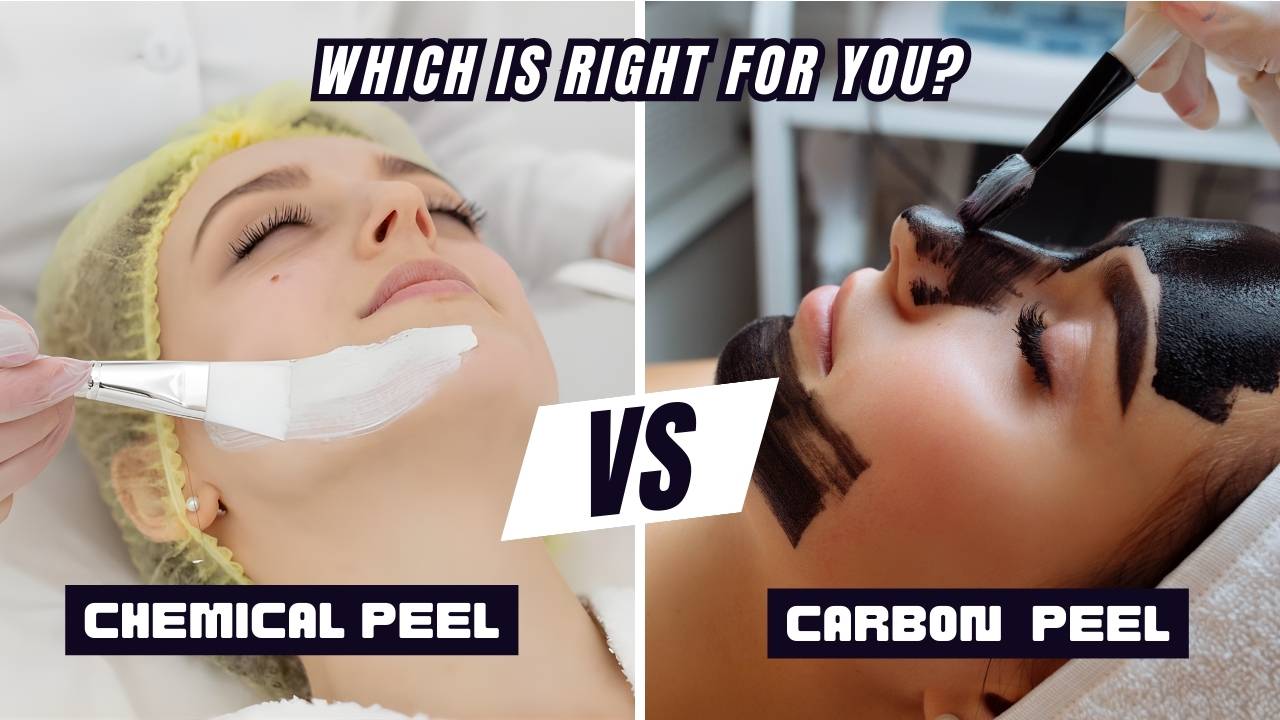
If you have persistent acne, spots, or skin tone issues, carbon peeling or chemical peel treatment can help. These treatments intend to give you a clearer, brighter, and healthier-looking skin. It can also make your skin more sensitive or cause you to develop dark spots due to improper treatment.
Dermatologists use these peels to cure acne, pigmentation, oily, and textured skin. Both have the purpose of enhancing the look of the skin; however, each of these differs in terms of the procedure, the level of safety, the dangers associated with each, as well as the type of skin they can best handle.
What Is Carbon Peeling?
The carbon peel, which is also referred to as the carbon laser peel, is non-invasive. It is helpful in enhancing the clarity, texture, and overall state of the skin. The technique employs the use of a carbon lotion and the principles of lasers.
During treatment, a thin layer of carbon lotion is applied. The carbon particles can penetrate pores, attaching themselves to oil, dirt, and dead skin cells. A specialized laser removes the carbon by vaporizing it, also removing the impurities in the process. This process cleans pores, reduces oiliness, and brightens the skin all without damaging the deeper layers.
Who Can Benefit From Carbon Peel Treatment?
Carbon peeling is particularly effective for individuals with:
- Oily skin: The skin care treatment will help regulate sebum production.
- Mild to moderate acne: It inhibits the bacteria that cause acne.
- Enlarged pores: This technique can help shrink pores and remove dirt that makes pores look enlarged. The carbon helps to clean the pores.
- Uneven skin texture or dull skin: Gently exfoliating the skin brings out a smooth and brighter complexion.
What Is Chemical Peel Treatment?
Chemical peel treatment involves using a precise chemical solution that removes the top layers of the skin. The technique helps in the stimulation of new skin formation that appears healthy.
The strength of the peel and the extent of penetration of the peel depend upon the nature of the chemical used and the concentration of the chemical.
The peel can be classified into various types, which include:
- Superficial peels: Light exfoliation, for dull skin, mild acne, and pigmentation. Minimal downtime.
- Medium peels: Targets deeper areas to remove marks caused by pigmentation, acne, or skin discoloration. Requires minimal recovery time.
- Deep peels: Strong peels for pigmentation problems, deep acne scars, and early aging signs. Have a long recovery process with close medical monitoring.
As a procedure that disturbs the barrier of the skin, a chemical peel should only be conducted by an experienced dermatologist to ensure that irritations and problems of pigmentation are avoided.
Who Can Benefit From Chemical Peels?
Chemical Peel Treatment can be applied in the Following Situations:
- Hyperpigmentation and Melasma: It helps in reducing darkness spots on the skin.
- Acne, Acne Scars: promotes the regeneration of the skin and relieves scars.
- Uneven Skin Texture or Dull Skin: Helps to equalize the texture of the skin and brightens the skin.
- Early Signs of Photoaging: It also helps to remove fine lines and small wrinkles.
- Oily Skin: It helps regulate oil secretion in the skin and manage clogged pores
How Doctors Evaluate Safety in Skin Peeling Treatments
When a patient’s skin type, condition, and health history have all been taken into consideration before a peel procedure, it ensures the procedure’s efficacy and safety for the individual. The outermost layer of the human skin gets removed during a peel procedure. If not performed correctly, it might end up irritating the skin or changing it change in color.
Doctors usually consider:
- Skin Type & Sensitivity: Some skin types are more prone to irritation or darkening.
- Skin Concerns: The intensity of acne, pigmentation, and scarring varies the type of peel.
- Skin Reaction History: A history of skin irritation, allergies, or pigmentation issues should be used cautiously.
- Sun Exposure Habits: Regular sun exposure acts as a predisposing factor in the development of complications.
- Medications or Topical Products: Some medications would require a temporary halt before the peeling stage.
Carbon Peel Treatment Benefits and Limitations
A carbon peel treatment, or Hollywood peel, is a gentle laser treatment that clears and smooths the skin. When the laser touches the carbon, the carbon is then converted to a gas form, along with oil and dead skin cells. This has the immediate effect of cleaning the skin.
Benefits of Carbon Peel Treatment
- Deep Pore Cleansing: Carbon fragments attract excess oil, dirt, and skin impurities. It picks them up and purifies the pores.
- Controls Oil and Acne: Helps in reducing oil as well as acne-causing bacteria, thus inhibiting acne.
- Brightens and Smooths Skin: Brightens the skin and smooths the skin’s surface by removing the top layer of dead skin cells
- Minimal Downtime: Patients who receive the injectables usually heal very quickly, as the redness and warmth fade away.
- Stimulates Collagen: It also has the property to stimulate collagen production in the skin, making it appear firmer and youthful.
The skin starts to appear brighter and more radiant, which can be observed by many people after the first treatment session, with the complete effect seen after a few treatment sessions.
Limitations of Carbon Peel Treatment
- Limited Effect on Deep Pigmentation: Carbon peels work best for surface-level skin issues. They might not effectively treat more profound hyperpigmentation problems.
- Not Ideal for Deep Scars: This product is effective for treating mild acne scars but not ideal for deep acne scars.
- Maintenance Needed: Results are often temporary. Multiple sessions, usually every few weeks, are recommended by a dermatologist.
Overall, carbon peels are considered safe and efficient in dealing with superficial concerns. They cannot be included in the plan of therapy involving deeper skin problems.
Carbon Peel Treatment Side Effects and Safety Concerns
Carbon peel treatment is a non-invasive treatment. It is safe in general for clearing skin, controlling oil, and managing mild acne. Risks are low if it is done by a trained dermatologist or professional.
However, patients should be made aware of possible side effects and safety concerns before treatment.
Common Side Effects
The side effects are usually mild and temporary; these include:
- Redness: Mild redness may be seen following the treatment and generally settles in a few hours.
- Warmth or Tingling: Mild warmth or tingling may be normal sensations either during or after treatment.
- Dryness or Flakiness: The skin might feel somewhat dry because the dead cells are taken away, and the pores are cleaned.
Safety Guidelines
For appropriate and safe therapy, several cautions are followed by dermatologists:
- Pre-Treatment Check: The dermatologist will evaluate the type of skin you have, the degree of its sensitivity, as well as past or present episodes of skin pigmentation.
- Professional Execution: It should only be done by trained dermatologists or laser specialists.
- Aftercare: Keep it away from direct sunlight, use broad-spectrum sunscreen on it, and moisturize it gently.
- Session Frequency: Multiple sessions may be needed to maintain results and avoid over-treating the skin.
Chemical Peel Benefits and Limitations
A chemical peel is a skilled way to smooth out the skin’s surface. A chemical solution is used to remove the top layers of skin. It has been widely utilized for the purpose of smoothing the skin and for the treatment of various issues by assisting the regeneration of the cells.
Benefits of Chemical Peel Treatment
- Improves Skin Texture and Tone: Exfoliates the skin by shedding the topmost layer of the cells. It further aids in eliminating minor scars and spots.
- Reduces Fine Lines and Acne Scars: The medium peel has the ability to fade fine lines as well as acne scars.
- Boosts Collagen: The supplement stimulates the process of regenerating the skin tissue and also acts as a collagen booster.
- Fights Sun Damage and Pigmentation: Its use has been marketed for various applications, including the prevention of sun spots.
- Customizable: The strength of the chemical peel chosen by a dermatologist may be adjusted depending on the skin that the individual.
Limitations of Chemical Peel Treatment
- Variable Downtime: There will be no downtime or minimal downtime in light peels. But in other peels, peeling, redness, and pain will be experienced for a few days to weeks.
- Increased Sun Sensitivity: Sun exposure becomes harmful to the skin. If care is not taken to avoid the sun, sunburn or changes in skin pigmentation may occur.
- Potential Side Effects: More intense peels can cause irritation or peeling skin. This depends on skin type and the strength of the peel.
- Risk of Over-Exfoliation: Inadequate exfoliation technique and after-care can cause over-exfoliation of the skin.
- Not for Everyone: Those with extremely sensitive skin or conditions might not be good candidates for peels.
Chemical Peel Side Effects and Potential Risks
Chemical peels are usually safe when done by a qualified dermatologist. However, they can have side effects. The chemical peel side effects and risks depend on the strength of the peel solution, the type of skin you have, and the care you take to follow the after-peeling/care instructions.
Common Side Effects
- Redness and Peeling: The skin will go red, peel off, and recover after the procedure of chemical peeling. It is expectable since it takes time for the skin to be cured.
- Irritation or Burning: Mild stinging, burning, or irritation may occur during or after the peel, especially with medium or deep peels.
- Temporary Darkening: Some areas, especially with dark spots, may temporarily look darker after the peel.
Potential Risks
- Post-Inflammatory Hyperpigmentation (PIH): People with darker skin or a history of pigmentation issues may get temporary or sometimes longer-lasting dark spots after a peel.
- Wrong Peel Strength or Technique: Using a peel that is too strong can cause redness, irritation, or even scarring. Always get it done by a trained professional.
- Poor Aftercare: Ineffective skin care procedures following a peeling procedure, like sun exposure and/or a lack of compliance with recommended skin care procedures, may lead to sun-damaged, pigmented, and poorly healing skin.
Carbon Peel vs Chemical Peel – Safety Comparison by Skin Type
| Skin Type / Concern | Carbon Peeling | Chemical Peel Treatment |
| Oily Skin | Generally safe; reduces oil and unclogs pores | Safe if mild peel selected; stronger peels need customization |
| Acne | Effective for mild to moderate acne; low downtime | Treats mild to severe acne; medium peels improve scars |
| Pigmentation | Limited effect; surface-level brightening | More effective; reduces dark spots and uneven tone |
| Sensitive Skin | Better tolerated; minimal irritation | Requires caution; mild superficial peels recommended |
| Acne Scars / Texture Issues | Limited effect; mostly surface-level | More effective for improving scars and texture |
Which Peel Is Safer for Pigmentation, Acne, and Sensitive Skin?
Selection of the safest peel would depend on an individual’s skin type as well as personal or professional assessment. Carbon peel and chemical peel treatments have their own advantages, and the deciding factor would be the professional skin expert, that is, the dermatologist.
- Pigmentation: Chemical peels are more effective for dark spots, melasma, and uneven skin tone. These remove pigmented layers and stimulate the growth of skin. These procedures and others are always conducted under close supervision to prevent conditions such as post-inflammatory hyperpigmentation.
- Acne and Oil Control: Carbon Peel is comparatively safer for patients having mild to moderate acne and oily skin. They are effective in cleaning the pores, reducing oil, & killing acne-causing bacteria.
- Sensitive Skin: The carbon peels would be considered more acceptable since the procedure does not involve the use of harsh chemicals and therefore does not affect the individual’s sensitive skin.
- Acne Scars and Texture Issues: Medium chemical peels have more effective correcting actions in the case of acne scars and textural abnormalities. Dealing with these problems requires a specific period of post-peel care.
Cost Considerations in Nepal: What Affects Peel Pricing?
Different considerations can influence the cost of skin peeling procedures in Nepal. They include the skin peeling technique, technology, as well as different skin types. This information will enable a patient seeking skin peeling procedures to make an informed decision.
Carbon Peel Price in Nepal
The carbon peel price in Nepal may vary based on:
- Technology Used: The cost of a laser technology session could be higher when more modern laser technology devices are used, or when more advanced.
- Number of Sessions: Several sessions are required in a maintainer cycle or for best outcomes.
- Clinical Expertise: The expertise demonstrated by dermatologists can lead to higher costs for treatment due to their successful track record.
Generally, carbon peels cost on a procedural basis, with differing rates in different clinics in Nepal.
Chemical Peel Price in Nepal
The cost of a chemical peel in Nepal is affected by the following:
- Type and Strength of Peel: The superficial peels, such as glycolic acid peels/lactic acid peels, tend to be less expensive. The medium to deeper peels, such as TCA peels, are more expensive.
- Depth of Peel: Deep peel skins require more expertise, equipment, or sometimes anesthesia, and as a consequence, the price increases.
- Number of Sessions: Cases involving the skin, like issues with pigmentation, acne scars, and so on, may require multiple sessions.
Note: Never fail to get the final price verification from a dermatologist. This always depends on the type of skin one has.
Dermatologist Tips Before Choosing Any Peel Treatment
For your peels to remain useful, you should:
- Avoid DIY or Salon Peels: These peels may cause a burn, irritation, or pigmentation problem to the skin of the face. It’s always better to consult a professional dermatologist for this peel.
- Don’t Combine Treatments Without Advice: It’s not a good idea to use laser treatments or exfoliation treatments simultaneously.
- Protect Your Skin from the Sun: The sun’s rays may make pigmentation worse and delay the healing process. So, it’s essential to apply sunscreen daily that has broad-spectrum protection and stay away from direct sun exposure, especially in the initial days of peeling.
- Share Your Skin History: Tell your dermatologist about medications, past treatments, allergies, or sensitivities. It enables them to select an appropriate peel and strength.
- Choose Qualified Professionals: In this respect, ensure to have the peel done by an experienced dermatologist. Proper expertise ensures better results and reduces risks.
FAQs
Who Should Avoid Carbon Peeling and Chemical Peels?
People with active skin infections, bad eczema, sensitive skin, and wounds should avoid peels. Also, avoid if you are pregnant or breastfeeding unless approved by your dermatologist. These precautions help prevent irritation, burns, or pigmentation issues.
How much does chemical peeling cost in Nepal?
It depends on the nature of peels used and their strength, on the number of sittings required, and on the proficiency at different clinics. The exact cost estimate may be provided in consultation with a dermatologist.
How much does carbon peeling cost in Nepal?
This all depends on the clinic, the technology involved, and the number of sessions needed. Most clinics within Nepal are relatively affordable, depending on whether they choose single or package services.
How long does a carbon peel last?
Results of Carbon Peel may last from a few weeks to over a month, depending on skin type and aftercare. Monthly sessions are required for long-term improvement.
How long does a chemical peel last?
The results attained through a chemical peel can last for a period measured in months with sufficient care and sun protection.
Can I do a chemical peel and a carbon peel together?
Yes, some dermatologists advise doing both peels. There should be a gap between these treatments so as to allow the benefits of each to be obtained safely.
Final Thoughts
Deciding on the type of peel, whether it’s a carbon or a chemical peel, depends on the skin type and problems. It’s always best to follow a dermatologist’s advice. For example, carbon peels are suited for oily, acne, or sensitive skin. They clean the skin gently, with much less downtime. Chemical peels work best for pigmentation, acne scars, and uneven skin. They give stronger results. Always have them done under a dermatologist’s supervision.
To achieve the best and safest outcomes, it will always be a good idea to consult a professional dermatologist. They will then be able to look at your skin and advise you as to which form of peeling will suit you the best. They will also assist you on how to take care of your new skin.
Revitalize Your Skin with Professional Treatment
Now, take that first step towards brighter, healthier, and glowing skin from the inside out.
Consult the experts at Lucent Hair and Skin Clinic and find out what kind of peel would work best for you.
Book Your Appointment Today and Let Your Skin Rejuvenate in This Safe and Effective Way! Schedule Your Consultation Today at Lucent Hair and Skin Clinic!!!
Popular Posts


Recent Posts
-

PRP Hair Treatment in Nepal: Cost, Process, and Results (2026 Guide)
Jul 03, 2026 | Lucent
-

Is Laser Hair Removal Safe? Risks, Side Effects & Safety Guide
Jun 11, 2026 | Lucent
-

Wrinkles on Face: Causes, Types, Prevention and Treatment Guide
Jun 11, 2026 | Lucent
-

Best Laser Hair Removal in Kathmandu – Safe & Long-Lasting Hair Reduction
Jun 11, 2026 | Lucent
-

Best Face Yoga Exercises for a Lifted, Toned & Youthful Face
May 18, 2026 | Lucent
-

How to Identify the Best Skin Clinic in Kathmandu for Safe Treatments?
May 18, 2026 | Lucent
-

Hydrafacial Benefits for Glowing and Healthy Skin
May 18, 2026 | Lucent
-

Laser Hair Removal Price in Nepal: What You Should Expect
May 03, 2026 | Lucent