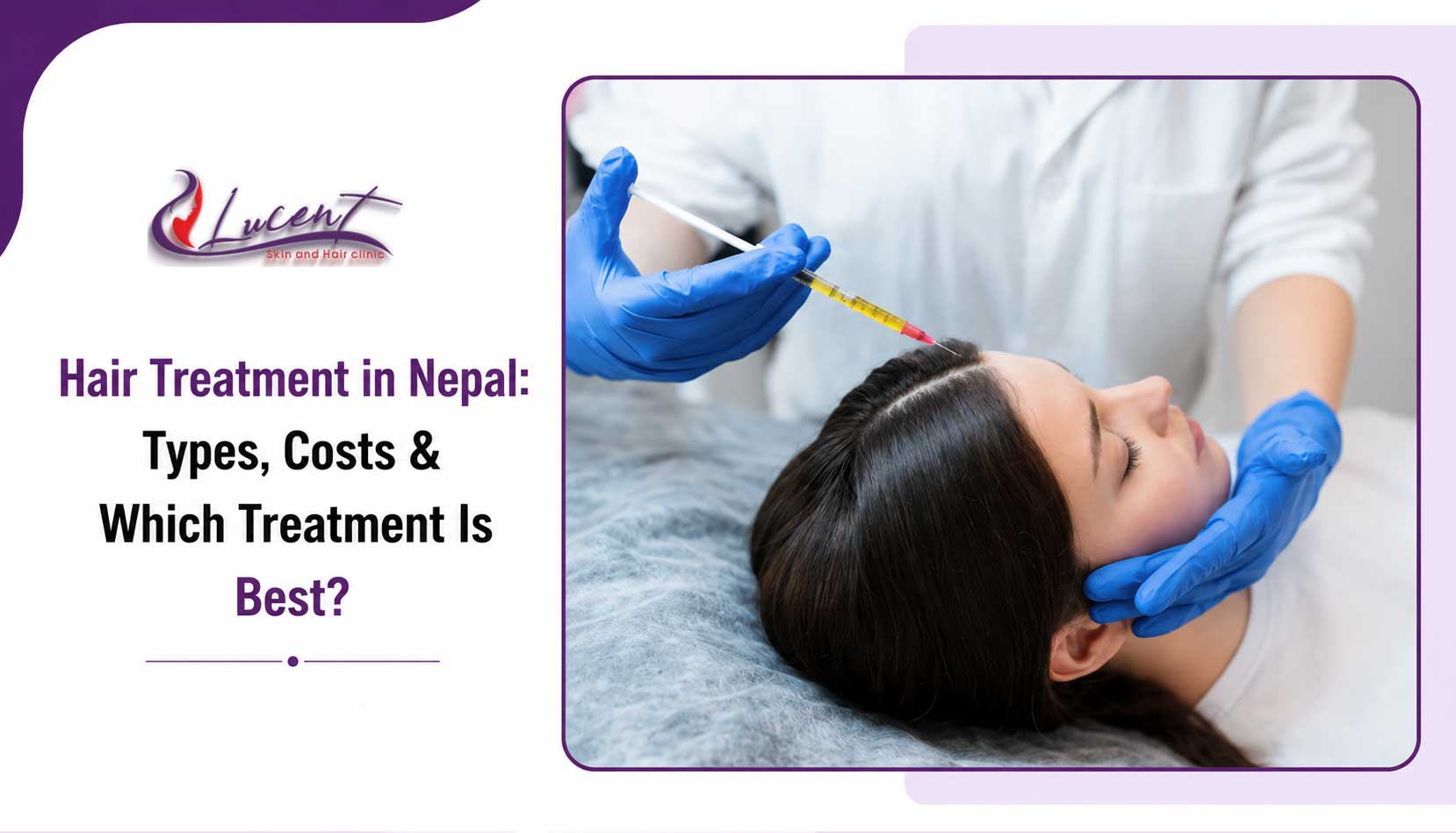
Hair fall is common. Almost everyone loses some hair every day. But when hair loss speeds up, or bald patches show up, it can hurt your confidence. The good news? Nepal now has real medical solutions consisting of various hair treatment in Nepal for hair loss. You don’t need to fly abroad or rely on home remedies that don’t work.
In this guide, we will cover all the hair treatment in Nepal. In addition to explaining each treatment, its purpose, and cost, we will help you choose the most appropriate treatment for your condition.
Why Does Hair Loss Happen?
Before deciding on hair treatment in Nepal, you need to know its cause. Hair loss has many different causes.
Common causes of hair loss include:
- Genetics: Male or female pattern baldness is hereditary. The medical term for this condition is androgenetic alopecia.
- Hormonal changes: Changes during pregnancy, thyroid problems, and menopause can be hair loss triggers.
- Stress: Excessive stress affects the hair cycle, putting it into a dormant phase, which results in hair loss.
- Nutrient deficiency: Iron, Vitamin D, and protein deficiencies make hair vulnerable to shedding.
- Scalp conditions: Dandruff, fungus infection, and psoriasis affect hair follicles.
- Poor hair care: Pulling, harsh chemicals and heat damage hair in the long run.
Your dermatologist can conduct a series of tests to determine the cause of your hair loss. This step is crucial since proper treatment requires a correct diagnosis.
Types of Hair Treatment in Nepal
The hair treatment centres in Nepal currently have treatments that are equivalent to those available in India, Thailand, and the Western world. Here are some of them:
1. PRP Hair Treatment (Platelet-Rich Plasma)
PRP hair treatment in Nepal makes use of your blood to help with hair loss issues. Below is what happens in the process. Blood is extracted through your arm and is spun in a machine known as a centrifuge to separate the PRP. The PRP contains high amounts of growth factors that are injected into your scalp.
These growth factors stimulate dormant hair follicles. They also increase the blood flow to your scalp, making your hair thick and strong.
Good for: Hair loss among both males and females; hair loss due to stress; pattern baldness; and hair loss treatments after transplantation.
Session time: About 30 to 45 minutes.
Sessions needed: The number of sessions needed is 4 to 6. These should be done within a span of four to six weeks.
Downtime: There is no downtime involved in this treatment. You will be able to continue working immediately, but do not wash your hair for 24 hours after the treatment so as to allow absorption of the growth factors to the scalp.
Cost in Nepal: PRP cost varies from clinic to clinic in Nepal. This therapy is sometimes combined with other therapies, such as lasers, to give better outcomes.
2. GFC Hair Treatment (Growth Factor Concentrate)
GFC is a fairly new variant of PRP. It is similar to PRP therapy, which uses your blood, too, but it is able to isolate even greater levels of growth factors and proteins. GFC gives faster results compared to PRP and is less session-intensive as well.
Good for: Mild to advanced hair loss, both men and women.
Sessions needed: Mild to moderate cases often need 3 sessions. More advanced hair loss may need up to 6 sessions.
Cost in Nepal: GFC hair treatment price in Nepal is around Rs. 6,000 for a single session, though the total cost depends on how many sessions you need.
Results timeline: Many patients notice thicker hair and better scalp health within a few weeks. Full results usually show up within 3 to 6 months.
3. Hair Transplant
Hair transplant in Nepal is the process of transferring hair follicles from the donor area (the back and sides of the head) to the bald spots permanently. In contrast to PRP or GFC, this treatment does not require repeating.
There are two ways to conduct hair transplant surgery:
- FUE (Follicular Unit Extraction): The extraction of individual follicles and their transplantation one by one. The absence of linear scars and faster healing are the benefits of this technique.
- FUT (Follicular Unit Transplantation): Removal of a strip of skin from the donor area, its division into follicles for transplantation. It allows transplanting a large area but leaves a thin scar.
Good for: Advanced cases of hair loss, receding hairlines, bald patches where follicles do not grow anymore.
Grafts needed: Usually, patients require 1,000 to 4,000 grafts, based on the size of the balding area. You will be able to get an exact estimate after a visit to the hair specialist.
Recovery: The procedure involves a local anaesthetic; hence, it is virtually painless. There might be minor swelling, irritation, and reddening that subsides in about a week. There will be some hair fall in the first month. That is quite common. Thereafter comes regrowth; there will be some visible changes in 3 to 4 months, while complete regrowth takes place in 9 to 12 months.
Permanence: Follicles used for transplantation have the quality to be resistant to hair loss; therefore, this treatment is long-term and lasts for life. The hair surrounding the transplanted area might become thinner due to ageing, but the transplanted hair will continue to grow.
Cost in Nepal: The cost of a complete scalp hair transplant in Nepal can be anything between NPR 60,000 and NPR 200,000, based on the number of grafts required, technique, and the severity of hair fall.
4. Microneedling for Hair Loss
Microneedling involves using an instrument with fine needles, often referred to as a dermapen, to create small punctures on the scalp. Such micro-injuries induce a healing process in your body and stimulate collagen formation and blood flow to the hair follicles.
In most cases, microneedling is applied in conjunction with PRP in order to increase the effectiveness of the therapy. The technique is known as PRP microneeding and involves applying the power of one’s blood to achieve therapeutic results.
Good for: Thinning in early stages, enhancing the efficiency of other hair procedures and improving the overall condition of the scalp.
Side effects: Mild irritation and swelling may be experienced shortly after the procedure but they will disappear within a few days.
Cost in Nepal: Pricing varies depending on the treatment site and the number of sessions. Customized packages are often created, especially when microneedling is combined with PRP.
5. Mesotherapy
Mesotherapy entails the injection of vitamins, minerals, and amino acids into the scalp. It helps nourish hair follicles internally and assists in hair growth along with other procedures.
Good for: Nutrient-depleted scalp problems and hair thinning.
6. Medicated and Topical Treatments
Every case does not need a procedure. There are some instances where hair fall can be treated using medicated shampoos, topical Minoxidil, or even an oral treatment prescribed by a dermatologist. This is more applicable to cases of thinning hair at an early stage.
Home Remedies vs. Clinical Hair Treatment
However, many individuals prefer to resort to home remedies initially. For example, using onion juice, coconut oil, masks from eggs and herbal shampoo are quite common practices in Nepal. Such methods could be helpful regarding scalp health. However, they are unlikely to treat the causes of the issue.
In contrast to home remedies that function on the surface, clinical treatment methods such as PRP, GFC, and hair transplants act on the cellular level. In other words, they address the reasons causing hair loss.
There is a simple principle one could follow here. In case a person loses a small number of hairs and wants to keep the scalp healthy, then home remedies and proper hair maintenance might suffice. If a person observes that he or she suffers from thinning spots, receding hairline, and increasing hair loss, then a visit to the dermatologist is necessary. Otherwise, the individual might face more difficulties in future because some follicles cease producing hair permanently due to dormancy.
Signs You Should See a Hair Specialist
Not all cases of hair fall require a visit to the clinic. However, there are some indications that it is time to make an appointment for a consultation:
- There’s more hair on your pillow, in the shower drain or on your brush than normal.
- Your part line is wider than it was a year ago.
- A balding crown or thinning hair at the crown.
- There are bald patches that suddenly appear, particularly in circular patterns.
- Apart from the loss of hair, your scalp itches, flakes or feels sore.
- Hair loss began following illness, pregnancy, or a major stress.
If any of these sounds familiar, don’t put it off any longer. Treatment which starts early will almost always be successful, compared to treatment that starts after the hair loss has been going on for years.
Which Hair Treatment in Nepal Is Best For You?
Hair treatment in Nepal should be based on your hair loss condition, money at hand, and purpose.
- Hair thinning: Select PRP, GFC, or microneedling treatment to boost active hair follicles.
- Bald spots: Hair transplantation is the most appropriate treatment since hair follicles stop functioning.
- Hair loss in early stages: Topical solutions or mesotherapy may aid in retarding hair loss and promoting its growth.
- Hair transplantation treatment follow-up: PRP therapy helps in accelerating recovery and boosting already grown hair.
- Affordable solution: GFC and topical treatment will cost you less, but will need maintenance treatments.
Consult with a dermatologist before any hair treatment. It will enable you to choose the most appropriate one based on your hair loss condition.
Hair Treatment Cost in Nepal: Quick Comparison
| Treatment | Typical Session Time | Sessions Needed | Approx. Cost |
| GFC Therapy | 30–45 minutes | 3–6 sessions | From Rs. 6,000 per session |
| PRP Therapy | 30–45 minutes | 4–6 sessions | Varies by clinic and package |
| Hair Transplant | 4–8 hours | One-time | NPR 60,000–200,000 |
| Microneedling | 20–30 minutes | Varies | Varies by area and sessions |
| Mesotherapy | 20–30 minutes | Varies | Varies by clinic |
Hair Treatment cost in Nepal can change based on the clinic, your scalp condition, and how many sessions your case needs. Always ask for a written quote after your consultation.
What to Expect During a Hair Treatment Consultation?
Visiting the clinic for the first time can be quite intimidating. Here is what to expect from a proper consultation:
- Scalp examination: Your doctor evaluates the state of your hair, scalp, and hair growth pattern.
- Health history evaluation: The doctor asks about your health, medications, and possible hereditary hair loss.
- Problem identification: In some cases, additional blood tests may be prescribed to reveal thyroid or iron problems.
- Treatments: According to your case, the doctor suggests one or a variety of treatments.
- Transparent fees: A reputable clinic charges properly and does not have any hidden payments.
A good sign is that if the clinic doesn’t follow these procedures, but moves you directly toward a sale, you should be wary. The treatment of hair loss is a medical procedure. It should feel as one.
Are these hair treatment in Nepal Safe?
Yes, there is a proper clinic, and the people are trained to do so. PRP and GFC utilizes your own blood, and therefore, the risk of allergy is very low. The hair transplant technique works with local anaesthetic and carries comparable dangers to other minor surgeries, including swelling and minor discomfort.
The largest safety factor is not the treatment! It’s how it’s done. Be sure to look for any clinic that provides experienced dermatologists, the necessary equipment, and a successful track record. When making an appointment for a procedure, ask the doctor about his qualifications.
Why Choose Lucent Skin and Hair Clinic?
Expert-Led Care
At Lucent, your treatment isn’t handed off to a technician following a script. Dr. Abhishek Pant and Dr. Sameer Khadka, both trained at NAMS and registered with the Nepal Medical Council, are directly involved in your care from diagnosis onward.
Everything Under One Roof
There’s no need to bounce between clinics depending on what stage of hair loss you’re at. PRP, GFC, FUE and FUT hair transplant in Nepal, microneedling, and mesotherapy are all offered here, so your treatment plan can evolve without switching providers halfway through.
A Real Consultation, Not a Pitch
Before anyone recommends a treatment, you sit down for a proper scalp examination. What you’re offered afterward is based on what’s actually going on with your hair, not on what happens to be on the price list that week.
Pricing You Can Actually See
Hair Treatment Cost in Nepal is laid out upfront. You won’t be quoted one figure at the consultation and handed a different bill later.
Aftercare That Doesn’t Stop at the Door
Once the session is over, the clinic doesn’t disappear. Follow-up guidance continues for as long as it’s needed, which matters a lot in a treatment process that plays out over months, not days.
A Plan Built Around You
A receding hairline and a few thinning patches aren’t the same problem, and they shouldn’t get the same treatment. Whatever you’re dealing with, the plan is shaped around your specific case rather than pulled off a shelf.
Final Thoughts
Hair loss is unsettling, but it’s rarely hopeless. Between PRP, GFC therapy, and hair transplant in Nepal, Nepal now has genuine medical options backed by trained dermatologists and decent equipment, not just gimmicks.
What actually matters is starting with a correct diagnosis. Once you know why you’re losing hair, the right hair treatment in Nepal isn’t really a mystery anymore.
So if you’ve been putting it off, book a consultation. It’s a short conversation, but it can save you from years of guessing and money spent on treatments that were never going to work for your particular case.
Curious what’s actually behind your hair loss? Book a consultation at Lucent Skin and Hair Clinic in Gatthaghar, Bhaktapur, and get an honest diagnosis along with a plan that’s actually built for you.
This article is meant for general information only and isn’t a replacement for professional medical advice. Talk to a qualified dermatologist before starting any hair treatment.
Frequently Asked Questions
Which type of treatment is best for hair?
Honestly, it depends on what stage you’re catching it at. Early thinning usually responds well to PRP or GFC hair treatment in Nepal. Once you’re dealing with fully bald patches, though, a transplant is typically what actually works.
Is GFC treatment good for hair?
It tends to work well, yes. GFC pulls a broader and more concentrated range of growth factors than PRP does, so people often see results a bit sooner. It’s particularly suited to early-stage thinning rather than advanced hair loss.
How much does GFC cost in Nepal?
Around Rs. 6,000 per session is the going rate, though your final cost depends on how many sessions your plan calls for. Prices shift slightly clinic to clinic depending on their equipment and staff experience.
Is PRP 100% safe?
It’s about as safe as these procedures get, mainly because it uses your own blood, so there’s no allergic reaction to worry about. That said, it’s not recommended if you have a blood disorder, clotting issues, or you’re on blood thinners worth mentioning during your consultation.
How much does PRP cost in Nepal?
Somewhere between Rs. 6,000 and Rs. 10,000 per session, depending on the clinic, the specialist doing it, and whether it’s paired with microneedling.
Is PRP or GFC better for hair?
GFC generally has the edge because it isolates a higher concentration of growth factors, which can mean quicker, slightly stronger results. But PRP is still a solid, well-tested option, and which one makes sense really comes down to how severe your hair loss is and what your dermatologist sees during the exam.
How many sessions of PRP or GFC are usually needed?
Most people go through 3 to 6 sessions, spaced a few weeks apart. It’s a gradual process you’ll usually notice less shedding first, with real regrowth showing up over the following 2–3 months.
Can PRP or GFC be combined with a hair transplant?
Yes. Many people combine PRP or GFC with a hair transplant. Some have it before surgery to strengthen existing hair, while others have it after surgery to support healing and improve graft growth. Your dermatologist can tell you if it’s right for you.
Popular Posts


Recent Posts
-

Hair Treatment in Nepal: Types, Costs & Which Treatment Is Best?
Jul 12, 2026 | Lucent
-

How to Choose the Best Dermatologist in Nepal?
Jul 08, 2026 | Lucent
-

Best Skin Care Products in Nepal (2026): A Dermatologist’s Buying Guide
Jul 06, 2026 | Lucent
-

PRP Hair Treatment in Nepal: Cost, Process, and Results (2026 Guide)
Jul 03, 2026 | Lucent
-
Is Laser Hair Removal Safe? Risks, Side Effects & Safety Guide
Jun 11, 2026 | Lucent
-

Wrinkles on Face: Causes, Types, Prevention and Treatment Guide
Jun 11, 2026 | Lucent
-
Best Laser Hair Removal in Kathmandu – Safe & Long-Lasting Hair Reduction
Jun 11, 2026 | Lucent
-

Best Face Yoga Exercises for a Lifted, Toned & Youthful Face
May 18, 2026 | Lucent