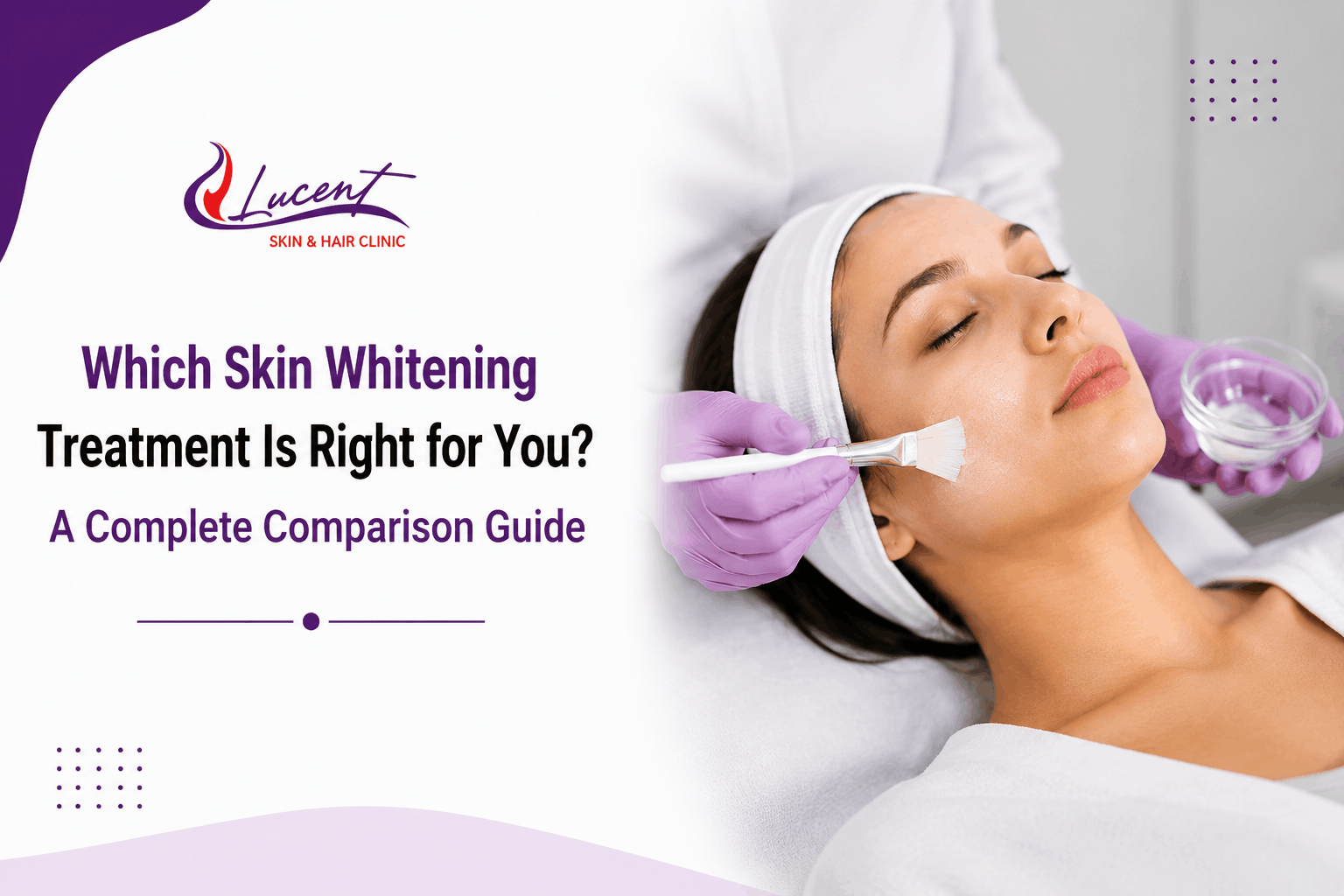
There is no single best skin whitening treatment. The best choice will vary depending on the underlying cause of your skin tone. Chemical peels are best for acne scars and mild skin pigmentation; lasers are used to treat sunspots; HydraFacial is for dull skin; and Carbon Laser Peel is for oily skin and enlarged pores. Your dermatologist can suggest the best skin whitening treatment for your skin.
Choosing the right treatment can be confusing. This guide explains the most effective ways to match your skin concern with the right procedure, rather than explaining each one individually. It also connects to detailed treatment guides, allowing you to learn more without reading the same information twice.
Choosing the Right Skin Whitening Treatment
Most of the time, many studies try to make comparisons between chemical peeling, glutathione treatment, laser, HydraFacial, and Carbon Laser Peel to determine which is best for all cases. In truth, each procedure is made to treat a certain skin problem. The one that treats your melasma effectively may not work on your oily skin and pores. Rather than trying to determine which one is best skin whitening treatment, you need to find out why you have uneven skin tone.
Step 1: Find Out What’s Causing Your Uneven Skin
To select an appropriate hyperpigmentation treatment, it is vital to determine the underlying cause of your condition. Causes are as follows:
- Acne scars: Dark spots formed after acne.
- Melasma: Brown patches on the face including cheeks, forehead, nose, or upper lip, which appear due to hormonal fluctuations or sun exposure.
- Sunspots and age spots: Pigmentation as a result of chronic sun damage.
- Dull skin: Skin with no dark spots but appears to be tired, dry or lacking luster.
- Oily skin with enlarged pores: Oily skin usually has some mild pigmentation or acne scars.
If you’re unsure whether you have melasma or another type of pigmentation, read our guide on Melasma vs. Hyperpigmentation: Causes, Differences & Treatment to understand the difference before choosing a treatment.
Step 2: Match Your Concern to a Treatment
Here’s how each concern often maps to a fix:
| Your Concern | Best-Suited Treatment | Why |
| Acne marks, mild dullness | Chemical Peel | Removes the top skin layer to reveal fresh skin below |
| Melasma | Peel + glutathione + sun protection | Melasma has more than one trigger, so one fix rarely holds |
| Sun spots, age spots | Laser Skin Rejuvenation | Targets the spot itself, not the skin around it |
| Dull, dry skin | HydraFacial | Cleans and hydrates; works well as regular upkeep |
| Oily skin, large pores, mild scars | Carbon Laser Peel | Uses a carbon coat plus laser to cut oil and shrink pores |
| Slow, overall brightening | Glutathione Therapy | Works from inside the body over weeks or months |
Use this table as a baseline, but not as a complete answer to your problem. Most people have multiple worries. This means that most patients require multiple treatments. This is common practice. Your dermatologist will outline this plan at your first appointment.
Treatment Options, Briefly Explained
Chemical Peel
Chemical peel involves using acid to remove the outermost layer of skin, which is followed by growing new skin. The new skin is smoother and appears even. Chemical peel is among the most inexpensive means of beginning skin whitening treatment. The effects seen by patients include slight irritation and peeling within a few days. It can be used to treat acne scars, mild pigmentation, and dull skin.
Glutathione Therapy
Glutathione is an antioxidant that occurs naturally. In a medical setting, it helps reduce stress in the cells of your skin. This will eventually improve the uniformity of your skin. It can be taken orally, via intravenous drip, or with other procedures. The dosage and form depend on the individual patient. So does the time that it takes to work. Curious whether or not glutathione treatment for skin whitening is suitable for you? Read Are Glutathione Tablets Safe for Skin Brightening? What You Should Know.
Laser Skin Rejuvenation
Lasers target the affected area directly. They break down the mark. The rest of the skin surrounding the affected area remains untouched. They are very precise and do not require much recovery time. For age spots or sun spots, lasers provide the fastest solution. However, they are not recommended for dull skin without dark marks.
HydraFacial
The HydraFacial treatment does not alter the color of your skin. The HydraFacial treatment works by exfoliating your dead skin cells to give you glowing skin and by hydrating your skin. The procedure is gentle and requires no downtime after the treatment. Would you like more information? Read HydraFacial Benefits for Glowing and Healthy Skin.
Carbon Laser Peel (Hollywood Peel)
The procedure begins with a carbon coating applied to the skin. Then a laser is used to peel it off. The treatment removes oil, dirt, and upper-layer blemishes. The method is effective for oily skin, large pores, and minor acne scars. Most patients have smooth skin right after one session. A complete series of treatments provides a longer-lasting result. Confused about whether to choose this procedure or chemical peel? See our compare guide: Carbon Peel vs Chemical Peel: Safety, Risks & Skin Suitability.
How Long Each Treatment Takes to Show Results
The timing is just as important as the treatment itself, particularly if you are preparing for an upcoming event:
- Chemical Peel: Changes happen within 1–2 treatments. Full effect after 4–6 treatments.
- Carbon Laser Peel: Smoothed skin can be seen within 1 treatment session. Full package includes 3–5 sessions.
- Laser: The spots will gradually start fading after several sessions (3–6).
- HydraFacial: Instant glow occurs within 1 session. It’s more like maintenance rather than a solution for deeply embedded spots.
- Glutathione: Change comes slowly, over weeks to a few months. It works from inside, not on the skin’s top layer.
Need fast changes to prepare for the upcoming event? Then the quickest ways are Carbon Peel and Chemical Peel. Need a gradual and steady change in your skin? The best choices would be Glutathione and laser.
Combining Treatments: When One Isn’t Enough
A lot of people, especially those with melasma and old sun spots, do better when multiple treatments are combined. A typical combination includes a series of peels with rigorous sunscreen usage. Other combinations include glutathione as well. It is also the case for melasma treatment, as melasma has a tendency to relapse if it is addressed only at the surface level. It is necessary to address the cause as well, which can be sun exposure or hormonal changes.
Who Should Be Cautious About Skin Whitening Treatments
Not all treatments work on all skin types. You might have to wait or choose a milder treatment if you have:
- Active acne or any cuts in the area to be treated
- Highly sensitive skin or a history of scar elevations
- Allergy to peels or whitening products
- Use of retinol or any other aggressive cream in recent past
- Pimples with an unknown cause, which can get even worse if treated without diagnosis by a doctor
This is also why DIY treatments and unregulated products are far more dangerous than they appear to be. This is because there is no pre-treatment check by a physician. Employing such treatment methods on your own now, as well as considering trying the actual one? Read How to Whiten Skin Safely.
Why a Dermatologist Consultation Matters
A dermatological consultation is much more than just the preliminary step before treatment. It provides an opportunity to create an individualised treatment plan that takes into account your skin type and pigmentation needs. In particular, during a dermatological consultation, a specialist will do the following:
- Determine the cause of your pigmentation, as there might be several reasons behind the same looking dark patches.
- Assess the condition of your skin and exclude other issues that might require other treatment.
- Suggest the most appropriate treatment according to your skin type and existing problems.
- Develop an individualized treatment plan, including a proper combination of procedures in case it is required.
- Provide realistic expectations in terms of possible results and recovery period.
Without a professional consultation, you risk opting for the wrong treatment method that might not only delay your progress but also make the situation worse.
Why Nepal’s Climate Changes Your Treatment Plan
The weather conditions prevailing in Nepal may have an impact on your skin and treatment effectiveness. High exposure to ultraviolet rays, particularly within the valley of Kathmandu, raises the probability of hyperpigmentation, tanning, and sun damage. The seasons may also play a role in how your skin reacts to certain procedures, including chemical peeling and laser treatment. It is important to use sunscreen on a regular basis and follow instructions from your dermatologist.
When to See a Dermatologist?
Not all skin problems need an immediate clinic visit. However, the following symptoms could indicate a situation where a home remedy will be pointless or even dangerous:
- The areas are growing or their shape is changing – this may be a sign of melasma or some other problem requiring diagnosis.
- Your use of skin care products bought in a pharmacy for 8-12 weeks did not bring any improvements.
- The affected area is also itchy, raised or different from surrounding skin – simple spots do not normally have these characteristics.
- You are currently using a number of skin lightening products and are unsure whether they are compatible.
- You have developed skin spots shortly after starting to take some medication – this may be a sign of an allergic reaction rather than sun or acne spots.
Recognized any of the symptoms? Visit a qualified dermatologist before attempting any other home remedies. Identifying the problem is essential since treating the surface will lead to recurring spots.
How to Maintain Your Results After Treatment?
Professional skin lightening treatments are capable of providing outstanding results; however, to maintain them, appropriate skin care and an overall healthy lifestyle are needed. Here are some tips that will help you achieve that:
- Wear sunscreen every day: Make sure that you apply a broad spectrum of sunscreen with SPF 30 or higher to avoid the effects of ultraviolet radiation and pigmentation.
- Follow a consistent skincare routine: You should cleanse and moisturize your skin along with using dermatologically approved products.
- Avoid unverified skin-whitening products: Using any unapproved cream or supplement will end up causing skin irritation and affect your results negatively.
- Attend follow-up appointments: Proper maintenance appointments are very important, particularly when using treatments such as HydraFacial or glutathione.
With proper aftercare and sun protection, you will have healthier and more beautiful-looking skin.
Final Thoughts
Choosing the right skin whitening treatment isn’t about finding the most expensive or most popular procedure it’s about finding the one that addresses your specific skin concern. Acne scars, melasma, sunspots, dull skin, and enlarged pores all require different approaches, and in many cases, the best results come from combining treatments under the guidance of a dermatologist.
A professional skin assessment helps identify the root cause of your pigmentation and ensures you receive a safe, personalized treatment plan. Along with the right procedure, daily sunscreen, a consistent skincare routine, and proper follow-up care are essential for maintaining long-lasting results and preventing pigmentation from returning.
Ready for brighter, healthier skin? Book a consultation at Lucent Skin Clinic to receive a personalized skin whitening treatment plan tailored to your skin.
Frequently Asked Questions
1. Which is the best treatment for skin whitening?
The best skin whitening treatment varies from one person to another because the type of treatment you choose to use should depend on your skin problem. For example, chemical peeling would be recommended for treating skin problems such as marks left behind by acne, mild pigmentation, and dark spots. On the other hand, for oily skin, Carbon Laser Peel would be recommended. A dermatologist can recommend the most suitable option after examining your skin.
2. Is glutathione used in Nepal for skin whitening?
Yes. Glutathione is applied in Nepal as an element of professional skin whitening therapies. It might be prescribed to you in the form of pills, injections, or intravenous injections based on your skin health and requirements for therapy. It should always be used with the help of a qualified dermatologist.
3. Is glutathione safe?
Glutathione is usually deemed to be safe when it is prescribed and supervised by a qualified healthcare practitioner. Its safety and efficacy depend on many factors including dose and way of administration as well as your general health.
4. How many sessions are needed for skin whitening treatment?
The number of sessions varies depending on the type of skin whitening treatment and the condition of your skin. Chemical peels require 4-6 sessions; Carbon Laser Peel requires 3-5 sessions, whereas HydraFacial is suggested to be done every month.
5. Can skin whitening treatments remove pigmentation permanently?
Professional treatments can be very effective at reducing skin discoloration, but they are not always going to have permanent effects. The application of daily sunscreen and good skincare will assist in preventing recurrence of pigmentation.
6. Which skin whitening treatment has the least downtime?
HydraFacial has the shortest downtime, and you can go back to your regular activities immediately. Laser Carbon Skin Rejuvenation and other laser procedures might have some redness for a short while, but with peels, there will be peeling for a few days.
7. Are skin whitening treatments suitable for all skin types?
The majority of skin whitening treatments offered professionally are ideal for all kinds of skins, provided that the procedure is done by an experienced dermatologist. Skins must be assessed in order to determine the best skin whitening treatment to have.
8. Can men get skin whitening treatments?
Yes, skin whitening and skin brightening treatments are ideal for both genders. The process depends more on your skin type and individual issues than your gender.
Popular Posts


Recent Posts
-

Tired of Searching “Dermatologist Near Me”? Discover Lucent Skin and Hair Clinic in Bhaktapur, Nepal!
Jul 24, 2026 | Lucent
-

Which Skin Whitening Treatment Is Right for You? A Complete Comparison Guide
Jul 24, 2026 | Lucent
-

Hair Treatment in Nepal: Types, Costs & Which Treatment Is Best?
Jul 12, 2026 | Lucent
-

How to Choose the Best Dermatologist in Nepal?
Jul 08, 2026 | Lucent
-
Best Skin Care Products in Nepal (2026): A Dermatologist’s Buying Guide
Jul 06, 2026 | Lucent
-

PRP Hair Treatment in Nepal: Cost, Process, and Results (2026 Guide)
Jul 03, 2026 | Lucent
-

Is Laser Hair Removal Safe? Risks, Side Effects & Safety Guide
Jun 11, 2026 | Lucent
-

Wrinkles on Face: Causes, Types, Prevention and Treatment Guide
Jun 11, 2026 | Lucent